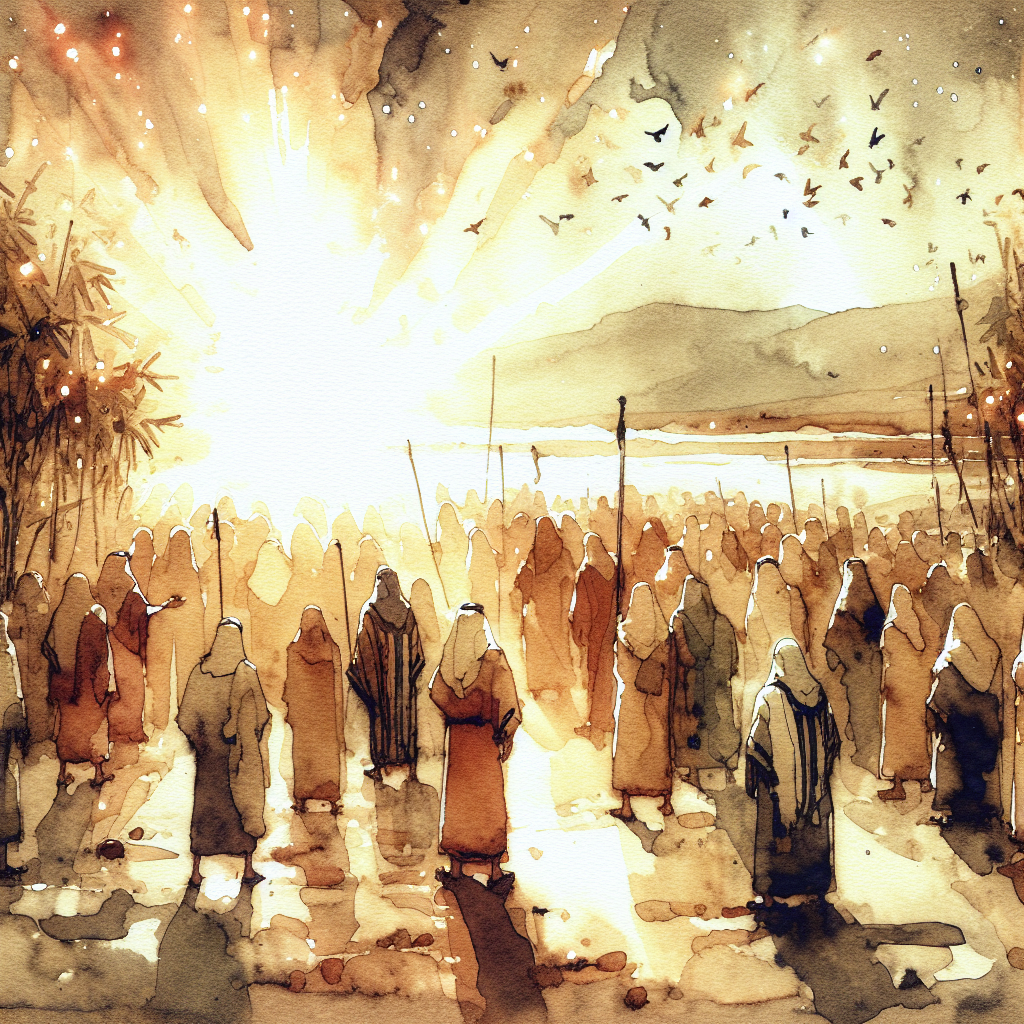
A King Who Did Not Know Joseph: Exodus 1:8-22
Then a new king, to whom Joseph did not matter, came to power in Egypt.
The words chill. Joseph—who saved Egypt from famine, who brought his family to Goshen, who was second only to Pharaoh—did not matter. Forgotten. Irrelevant. The new king knew nothing of the Hebrew who had rescued the nation.
Look, he said to his people, the Israelites have become far too numerous for us.
Fear drove policy. The Israelites had multiplied as God promised Abraham. What was blessing to Israel felt like threat to Egypt. Too numerous. Too powerful.
Come, we must deal shrewdly with them or they will become even more numerous and, if war breaks out, will join our enemies, fight against us and leave the country.
Shrewd dealing. Political calculation. What if they side with our enemies? What if they leave? The fear was irrational—the Israelites had served Egypt faithfully for generations. But fear rarely needs facts.
So they put slave masters over them to oppress them with forced labor, and they built Pithom and Rameses as store cities for Pharaoh.
Oppression began. Slave masters. Forced labor. The descendants of Abraham, Isaac, and Jacob—now building Egyptian cities under the whip.
But the more they were oppressed, the more they multiplied and spread; so the Egyptians came to dread the Israelites.
The irony cuts deep. Oppression was supposed to weaken them. Instead, they multiplied faster. God's promise to Abraham was unstoppable. Egyptian dread intensified.
And they worked them ruthlessly.
Ruthlessly. The Hebrew suggests breaking, crushing. No mercy. No rest. Brutal labor designed to destroy.
They made their lives bitter with harsh labor in brick and mortar and with all kinds of work in the fields; in all their harsh labor the Egyptians worked them ruthlessly.
Bitter lives. Brick and mortar under the sun. Field work without relief. The repetition hammers: harsh labor, ruthless treatment. This was slavery at its cruelest.
The king of Egypt said to the Hebrew midwives, whose names were Shiphrah and Puah, When you are helping the Hebrew women during childbirth on the delivery stool, if you see that the baby is a boy, kill him; but if it is a girl, let her live.
Pharaoh escalated to genocide. The midwives—we know their names when we don't know Pharaoh's name—received orders to murder. Every boy, killed at birth. Only girls allowed to live.
The delivery stool became an execution site. The first breath became the last.
The midwives, however, feared God and did not do what the king of Egypt had told them to do; they let the boys live.
Civil disobedience. The midwives feared God more than Pharaoh. They refused the order. They let the boys live.
Two women against an empire. Faith against fear. Their names are remembered; Pharaoh's is lost.
Then the king of Egypt summoned the midwives and asked them, Why have you done this? Why have you let the boys live?
Pharaoh noticed. The boys kept appearing. He demanded explanation.
The midwives answered Pharaoh, Hebrew women are not like Egyptian women; they are vigorous and give birth before the midwives arrive.
The answer was technically true and strategically brilliant. By the time we arrive, the baby is already born. The Hebrew women are too strong, too fast. What could we do?
So God was kind to the midwives and the people increased and became even more numerous. And because the midwives feared God, he gave them families of their own.
God rewarded their courage. Kindness to the midwives. Families given. The people multiplied still more. Pharaoh's genocide failed at the hands of two brave women.
Then Pharaoh gave this order to all his people: Every Hebrew boy that is born you must throw into the Nile, but let every girl live.
The order went public. No longer secret killing by midwives—now open drowning by all Egyptians. Every boy into the Nile. The river that gave Egypt life would take Hebrew lives.
Into this darkness, a baby in a basket would float. The very waters of death would become the waters of deliverance.
Powered by ChurchWiseAI
This illustration is a preview of what our AI-powered ministry platform can do. ChurchWiseAI offers a full suite of tools built for pastors and church leaders.
Sermon Companion
Build entire sermons with AI — outlines, illustrations, application points, and slide decks tailored to your tradition.
Ministry Chatbot
An AI assistant trained on theology, counseling frameworks, and church administration to help with any ministry question.
Bible Study Builder
Generate discussion guides, devotionals, and small group materials from any passage — in minutes, not hours.
Try any app free for 7 days — no credit card required.
Get Started