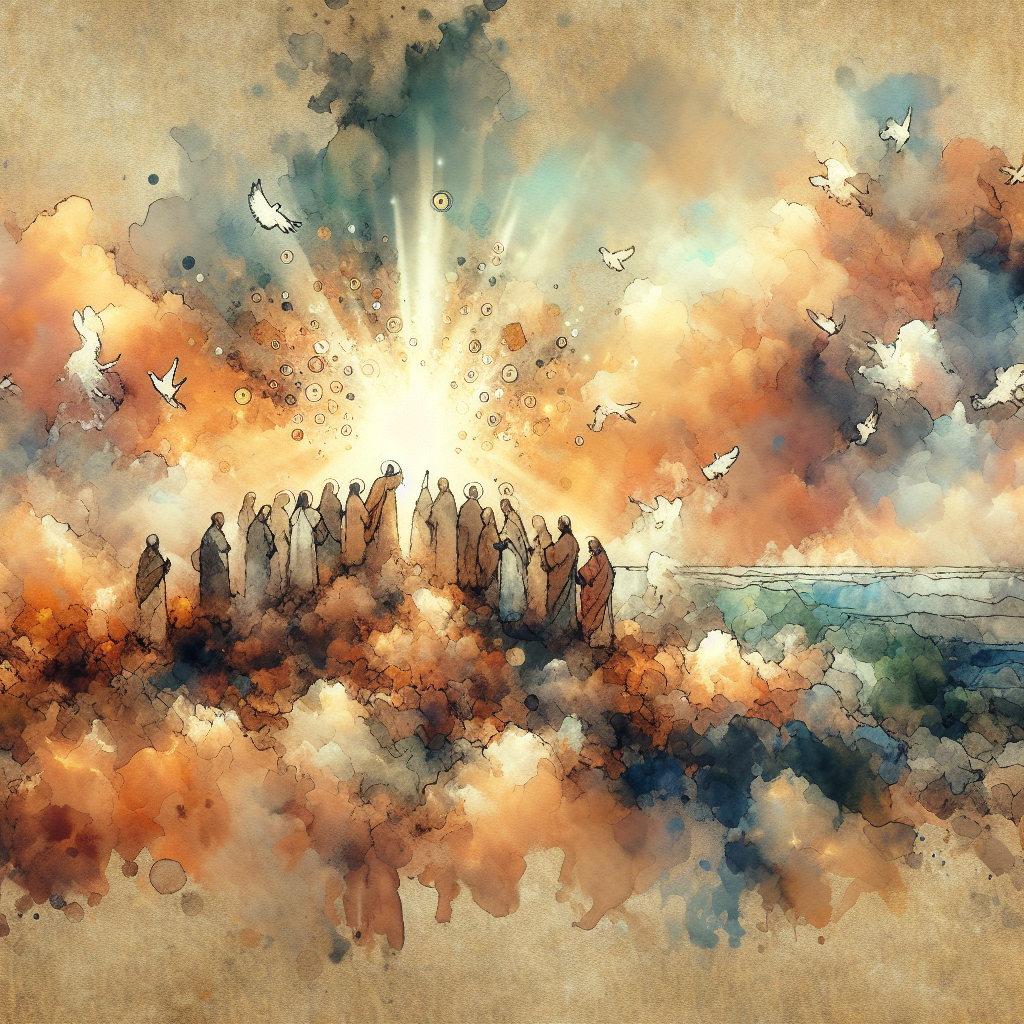
Children of Light: 1 Thessalonians 5:1-11
Now, brothers and sisters, about times and dates we do not need to write to you, for you know very well that the day of the Lord will come like a thief in the night.
Another question answered. Not just "what about the dead?" but "when will this happen?"
Times and dates. Chronos and kairos. The Thessalonians wanted to know when.
We do not need to write. They already knew the principle. The day of the Lord. The Old Testament phrase—the day of God's decisive intervention.
Will come like a thief in the night. Unexpected. Sudden. Without announcement. Thieves don't send advance notice.
While people are saying, "Peace and safety," destruction will come on them suddenly, as labor pains on a pregnant woman, and they will not escape.
While people are saying. The world's false confidence. Peace and safety. Security. Complacency. Everything under control.
Destruction will come on them suddenly. Olethros—ruin, destruction. Suddenly—aiphnidios—without warning. The complacency shattered.
As labor pains on a pregnant woman. The image: unexpected timing, inevitable arrival, inescapable once begun. The woman knows the baby will come; she doesn't know exactly when. And when it starts—no stopping it.
And they will not escape. Ou me—emphatic negative. No possibility of escape. For them.
But you, brothers and sisters, are not in darkness so that this day should surprise you like a thief.
But you. The contrast began. Not in darkness. The unbelievers walked in darkness—blind to the day's approach. The believers walked in light—aware, alert, expectant.
So that this day should surprise you like a thief. The day would still come suddenly. But not as surprise to those who were ready. Not as disaster to those who were watching.
You are all children of light and children of the day. We do not belong to the night or to the darkness.
Children of light. Huioi photos. Identity. Character. Light was their family. Children of the day. The day of the Lord was their home territory.
We do not belong to the night or to the darkness. The contrast was absolute. Night versus day. Darkness versus light. Two realms. Two citizenships.
So then, let us not be like others, who are asleep, but let us be awake and sober.
So then. The ethical implication. The identity demanded behavior.
Let us not be like others, who are asleep. Sleep—different from the sleep of death in chapter 4. This was spiritual dullness. Moral unconsciousness.
Let us be awake and sober. Gregoreo—stay alert, watch. Nepho—be clear-headed, free from intoxication.
For those who sleep, sleep at night, and those who get drunk, get drunk at night.
The natural order. Sleep belonged to night. Drunkenness belonged to night. The darkness concealed both.
But since we belong to the day, let us be sober, putting on faith and love as a breastplate, and the hope of salvation as a helmet.
But since we belong to the day. Our realm determined our readiness.
Let us be sober. Clear-headed. Alert.
Putting on faith and love as a breastplate. The armor imagery. The breastplate protected vital organs. Faith and love—protecting the heart.
The hope of salvation as a helmet. The helmet protected the head. Hope—guarding the mind from despair or presumption.
The armor of Isaiah 59, adapted for believers. Defense against the day that would destroy the unprepared.
For God did not appoint us to suffer wrath but to receive salvation through our Lord Jesus Christ.
The assurance. God did not appoint us to wrath. Tithemi—place, set, appoint. The believers' appointment was different.
But to receive salvation. Peripoiesis—acquisition, possession. Salvation was their appointed destiny.
Through our Lord Jesus Christ. The means. The mediator. The Savior.
He died for us so that, whether we are awake or asleep, we may live together with him.
He died for us. The foundation. The reason salvation was possible.
Whether we are awake or asleep. Back to the question of chapter 4—living or dead when he returns. Both categories covered. We may live together with him. The promise: life with Christ, regardless of whether death intervened.
Therefore encourage one another and build each other up, just as in fact you are doing.
The same application as chapter 4. Encourage one another. Parakaleo. Build each other up. Oikodomeo—construct, edify.
Just as in fact you are doing. Affirmation. They were already doing it. Keep doing it.
The day was coming.
Like a thief—but not to children of light.
Like labor pains—sudden but not surprising to those who expected.
The response: alertness, sobriety, armor, encouragement.
Not appointed for wrath.
Appointed for salvation.
Whether living or dead when he comes—together with him.
This was the Christian position.
Ready for the day.
Children of light awaiting the light.
Creative Approach
theological_meditation
Powered by ChurchWiseAI
This illustration is a preview of what our AI-powered ministry platform can do. ChurchWiseAI offers a full suite of tools built for pastors and church leaders.
Sermon Companion
Build entire sermons with AI — outlines, illustrations, application points, and slide decks tailored to your tradition.
Ministry Chatbot
An AI assistant trained on theology, counseling frameworks, and church administration to help with any ministry question.
Bible Study Builder
Generate discussion guides, devotionals, and small group materials from any passage — in minutes, not hours.
Try any app free for 7 days — no credit card required.
Get Started