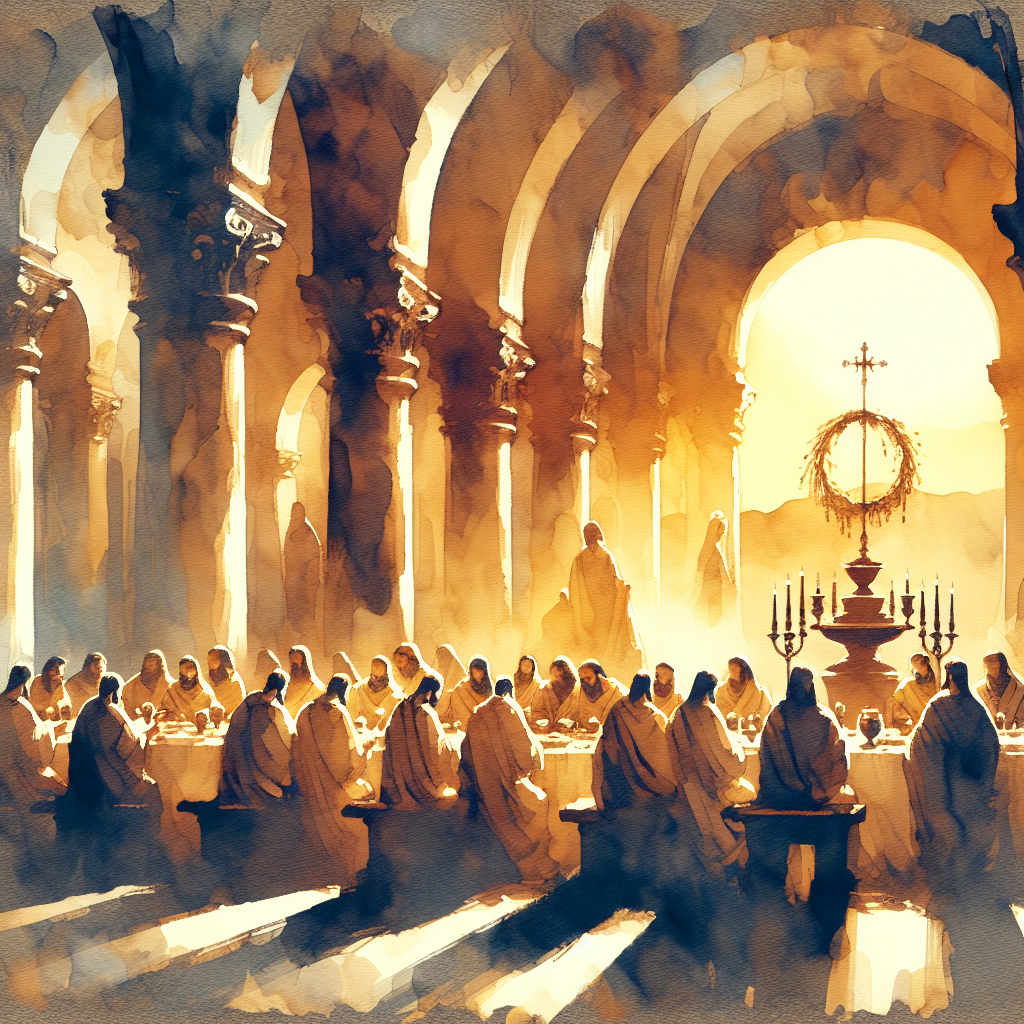
Discerning the Body: 1 Corinthians 11:17-34
In the following directives I have no praise for you, for your meetings do more harm than good.
Paul had praised them for maintaining traditions. Now the praise stopped.
I have no praise for you. Ouk epaino. No commendation. Your meetings do more harm than good. The gatherings—meant for edification—had become occasions for damage.
In the first place, I hear that when you come together as a church, there are divisions among you, and to some extent I believe it.
Divisions. Schismata. The factions again. When you come together as a church. The assembly. The gathering should have unified. Instead it divided.
To some extent I believe it. Paul was cautious. Reports could exaggerate. But the pattern was credible.
No doubt there have to be differences among you to show which of you have God's approval.
Haireseis—factions, sects. Have to be. The sifting was necessary. Which of you have God's approval. Dokimoi—tested, approved. The divisions revealed character.
So then, when you come together, it is not the Lord's Supper you eat.
The Lord's Supper. Kuriakon deipnon. The meal belonging to the Lord. The central act of worship. But the Corinthians had corrupted it.
It is not the Lord's Supper you eat. Whatever they were doing, it wasn't that.
For when you are eating, some of you go ahead with your own private suppers. As a result, one remains hungry and another gets drunk.
The abuse described. The early church combined the Lord's Supper with a full meal—the agape feast. Rich members brought fine food. Poor members brought little or nothing.
Some of you go ahead with your own private suppers. The wealthy didn't wait. They ate before the laborers arrived. They didn't share. Their abundance stayed private.
As a result. The consequence. One remains hungry. The poor member. Another gets drunk. Methuo. The wealthy member, gorged and inebriated.
The same table. Opposite experiences. Division at the Lord's table.
Don't you have homes to eat and drink in? Or do you despise the church of God by humiliating those who have nothing? What shall I say to you? Shall I praise you? Certainly not in this matter!
The rebuke intensified. Eat at home if you want private meals. Despise the church of God. Kataphroneo—look down on. By humiliating those who have nothing. The poor shamed. Me echontas—the have-nots.
Shall I praise you? Certainly not. The answer emphatic.
For I received from the Lord what I also passed on to you:
The tradition. Received. Passed on. Paralambano and paradidomi. The vocabulary of faithful transmission.
From the Lord. The source was Christ himself. Whether by direct revelation or through apostolic chain—the teaching was the Lord's.
The Lord Jesus, on the night he was betrayed, took bread, and when he had given thanks, he broke it and said, "This is my body, which is for you; do this in remembrance of me."
The night he was betrayed. Paradidoto—was being handed over. The night of treachery. The night of arrest.
Took bread. Gave thanks. Broke it. The simple actions. This is my body. Touto estin to soma. The identification.
Which is for you. Huper humon. For your benefit. For your salvation. Do this in remembrance of me. Anamnesis—memory, recollection. The meal as memorial.
In the same way, after supper he took the cup, saying, "This cup is the new covenant in my blood; do this, whenever you drink it, in remembrance of me."
After supper. The sequence. He took the cup. The wine. This cup is the new covenant. Kaine diatheke. Jeremiah's prophecy fulfilled.
In my blood. The blood that ratified the covenant. The blood that sealed the agreement.
Do this, whenever you drink it, in remembrance of me. The repeated instruction. Memory. Remembrance.
For whenever you eat this bread and drink this cup, you proclaim the Lord's death until he comes.
Proclaim. Katangello—announce, declare. The meal was proclamation. Not just eating but preaching. The Lord's death. Thanatos. The death. Until he comes. Achri hou elthe. The meal stretched from cross to return.
So then, whoever eats the bread or drinks the cup of the Lord in an unworthy manner will be guilty of sinning against the body and blood of the Lord.
Unworthy manner. Anaxios. The how mattered. Guilty of sinning against. Enochos—liable for, held responsible. The body and blood of the Lord. The abuse of the meal was an offense against Christ himself.
Everyone ought to examine themselves before they eat of the bread and drink from the cup.
Examine. Dokimazeto—test, prove. Heautou—themselves. Self-examination required. Before eating. Before drinking. The pause for reflection.
For those who eat and drink without discerning the body of Christ eat and drink judgment on themselves.
Without discerning the body. Diakrino to soma. Perhaps the physical elements—treating them as ordinary food. Perhaps the church—the body of believers being ignored while the wealthy ate alone.
Eat and drink judgment. Krima. The meal that should bring blessing brought condemnation. On themselves. Self-inflicted.
That is why many among you are weak and sick, and a number of you have fallen asleep.
The consequences were visible. Weak. Astheneis. Sick. Arrostoi. Many. Not a few.
Fallen asleep. Koimontai. Died. A number of you. Deaths in the community.
The Lord's discipline was real. The abuse had physical consequences.
But if we were more discerning with regard to ourselves, we would not come under such judgment.
Self-examination prevented judgment. Diakrino—discern. If they would judge themselves, the Lord wouldn't have to.
Nevertheless, when we are judged in this way by the Lord, we are being disciplined so that we will not be finally condemned with the world.
Discipline. Paideuo—trained, corrected. Not condemnation. Not final judgment. But fatherly correction.
So that we will not be finally condemned with the world. The discipline was mercy. Better temporal sickness than eternal destruction.
So then, my brothers and sisters, when you gather to eat, you should all eat together.
The practical instruction. Wait for each other. Eat together. Allēlous ekdechesthe. The solution was simple. Wait.
Anyone who is hungry should eat something at home, so that when you meet together it may not result in judgment.
Eat at home if you can't wait. So that the gathering. The assembly. Would not result in judgment.
And when I come I will give further directions.
More to say. Later. In person.
The Lord's Supper had been corrupted.
Division at the table of unity.
Humiliation at the feast of love.
Drunkenness at the memorial of death.
But it could be corrected.
Wait for each other.
Examine yourselves.
Discern the body.
Proclaim the Lord's death.
Until he comes.
Creative Approach
historical_reconstruction
Powered by ChurchWiseAI
This illustration is a preview of what our AI-powered ministry platform can do. ChurchWiseAI offers a full suite of tools built for pastors and church leaders.
Sermon Companion
Build entire sermons with AI — outlines, illustrations, application points, and slide decks tailored to your tradition.
Ministry Chatbot
An AI assistant trained on theology, counseling frameworks, and church administration to help with any ministry question.
Bible Study Builder
Generate discussion guides, devotionals, and small group materials from any passage — in minutes, not hours.
Try any app free for 7 days — no credit card required.
Get Started