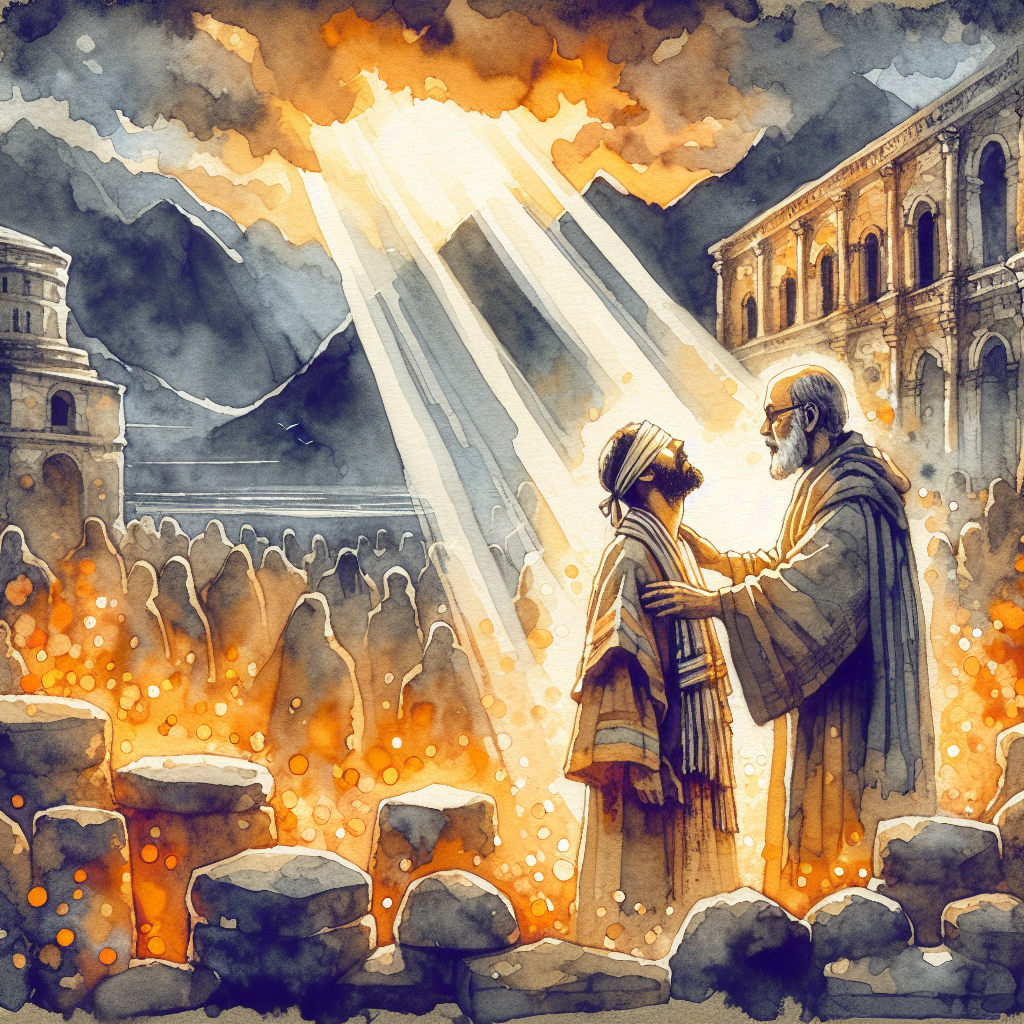
I Was Blind But Now I See: John 9:1-41
As he went along, he saw a man blind from birth.
Blind from birth. Never a sunrise, never a mother's face, never color or shape. Darkness from the womb.
His disciples asked him, Rabbi, who sinned, this man or his parents, that he was born blind?
The theological question of suffering. In their framework, affliction meant punishment. So who was being punished?
Neither this man nor his parents sinned, said Jesus, but this happened so that the works of God might be displayed in him.
Jesus rejected their premise. This blindness was not punishment but platform. The works of God were about to be displayed.
After saying this, he spit on the ground, made some mud with the saliva, and put it on the man's eyes.
Spit and dirt. Mud applied to blind eyes. The method was strange, even offensive. But Jesus often used the physical to accomplish the spiritual.
Go, he told him, wash in the Pool of Siloam. So the man went and washed, and came home seeing.
Go. Wash. The man obeyed—walked blind to the pool, entered the water, washed his eyes. And came home seeing. The darkness of a lifetime ended in an instant.
His neighbors asked, Isn't this the same man who used to sit and beg? Some claimed that he was. Others said, No, he only looks like him. But he himself insisted, I am the man.
The transformation was so complete that identity was questioned.
They brought him to the Pharisees. Now the day on which Jesus had made the mud and opened the eyes was a Sabbath.
Sabbath. Jesus had healed on the Sabbath—again. The Pharisees would have concerns.
Some of the Pharisees said, This man is not from God, for he does not keep the Sabbath. But others asked, How can a sinner perform such signs? So they were divided.
The miracle was undeniable, but the method violated their understanding. How could a sinner give sight?
Then they turned again to the blind man, What have you to say about him? The man replied, He is a prophet.
The healed man's understanding was growing. First Jesus, then prophet—soon he would see more.
They summoned the man's parents. We know he is our son, the parents answered, and we know he was born blind. But how he can see now, we don't know. Ask him.
The parents deflected, afraid of being expelled from the synagogue for acknowledging Jesus as Messiah.
A second time they summoned the man. Give glory to God by telling the truth, they said. We know this man is a sinner.
He replied, Whether he is a sinner or not, I don't know. One thing I do know. I was blind but now I see!
The man refused to engage their theology. I know one thing: I was blind. Now I see. Dispute that.
The man answered their challenges: Now that is remarkable! You don't know where he comes from, yet he opened my eyes. Nobody has ever heard of opening the eyes of a man born blind. If this man were not from God, he could do nothing.
The healed man became theologian. The evidence demands a verdict: Jesus is from God.
To this they replied, You were steeped in sin at birth; how dare you lecture us! And they threw him out.
Thrown out. Expelled from the synagogue. The man who could finally see was cast into social darkness.
Jesus heard that they had thrown him out, and when he found him, he said, Do you believe in the Son of Man?
Jesus found him. The one rejected by the religious establishment was sought by the Lord.
Who is he, sir? the man asked. Tell me so that I may believe in him.
Jesus said, You have now seen him; in fact, he is the one speaking with you.
Then the man said, Lord, I believe, and he worshiped him.
Worship followed faith. The progression was complete: blind beggar to seeing disciple to worshiper.
Jesus said, For judgment I have come into this world, so that the blind will see and those who see will become blind.
The irony was thick. The physically blind received sight—and insight. The religiously seeing proved themselves blind.
I was blind but now I see. The words echo through history—the testimony of everyone who has encountered Jesus and had their eyes opened.
Powered by ChurchWiseAI
This illustration is a preview of what our AI-powered ministry platform can do. ChurchWiseAI offers a full suite of tools built for pastors and church leaders.
Sermon Companion
Build entire sermons with AI — outlines, illustrations, application points, and slide decks tailored to your tradition.
Ministry Chatbot
An AI assistant trained on theology, counseling frameworks, and church administration to help with any ministry question.
Bible Study Builder
Generate discussion guides, devotionals, and small group materials from any passage — in minutes, not hours.
Try any app free for 7 days — no credit card required.
Get Started