No Other Gospel: Galatians 1:1-10
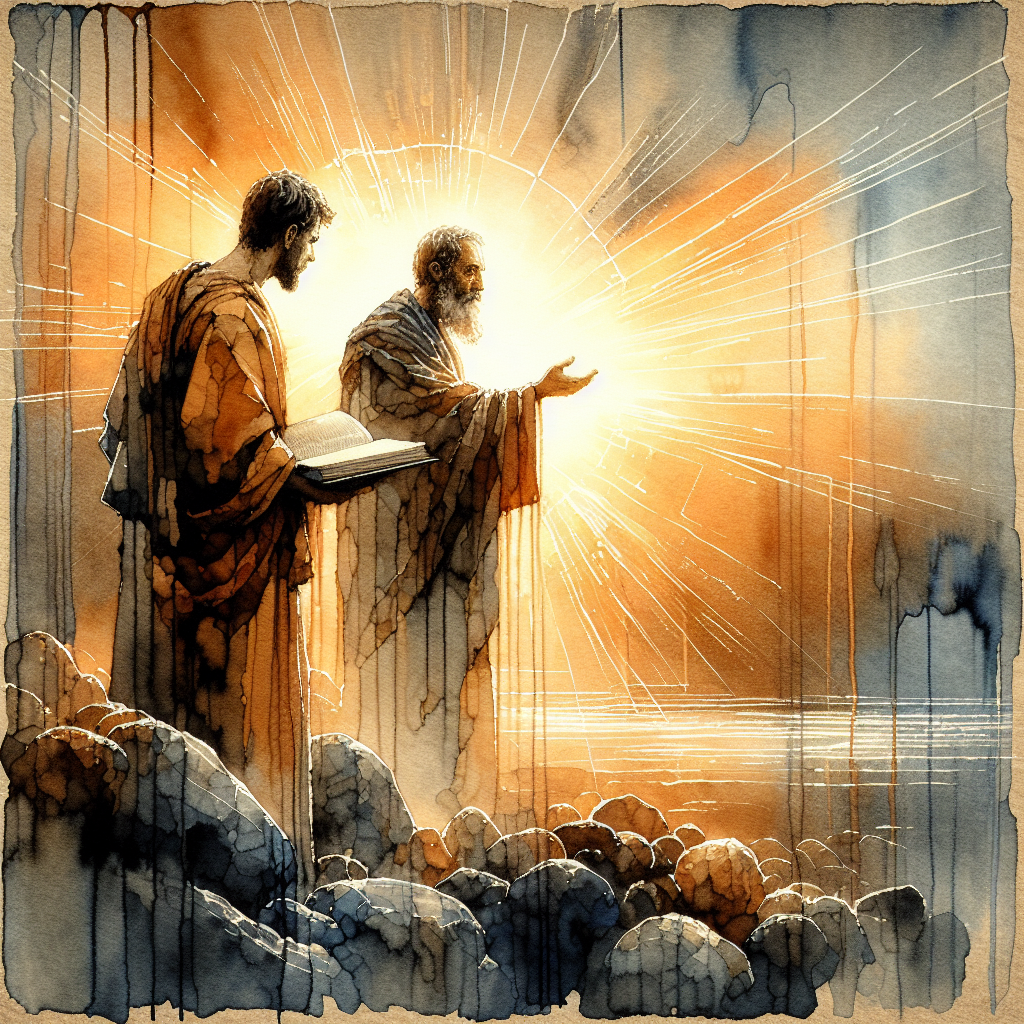
Paul's hand shook as he dictated. Not from age or illness—from anger.
"Paul, an apostle—sent not from men nor by a man, but by Jesus Christ and God the Father, who raised him from the dead."
He emphasized each word. Not from men. Not by a man. The Galatians had been told that Paul's apostleship was second-hand, derived, inferior. He was setting the record straight from the first sentence.
"And all the brothers and sisters with me, to the churches in Galatia."
The churches. Plural. The problem had spread. Antioch of Pisidia, Iconium, Lystra, Derbe—the cities where he had planted churches on his first journey, where he had been stoned and left for dead, where he had poured out his life. Those churches were now being poisoned.
"Grace and peace to you from God our Father and the Lord Jesus Christ, who gave himself for our sins to rescue us from the present evil age, according to the will of our God and Father, to whom be glory for ever and ever. Amen."
The standard greeting. Grace and peace. But even here, Paul couldn't help himself—he inserted the gospel. Christ gave himself for our sins. Rescue from this present evil age. The will of God. Glory forever.
This was the gospel they were abandoning.
"I am astonished."
The word burst out. Thaumazo—amazed, shocked, stunned. Paul had written to Corinth about their divisions, to Thessalonica about their confusion, to Rome about theology they needed to understand. But this was different.
"I am astonished that you are so quickly deserting the one who called you to live in the grace of Christ and are turning to a different gospel."
Deserting. The military word for abandoning your post. For going AWOL. For treason. They were deserters—and they were doing it quickly. The ink was barely dry on his previous visit, and already they were turning.
A different gospel. The phrase was an oxymoron, a contradiction. There was no different gospel. There was only the gospel and its counterfeits.
"Which is really no gospel at all."
He corrected himself immediately. It wasn't a different gospel—it was no gospel. Not good news but bad news dressed in religious clothing. Not grace but slavery. Not freedom but chains.
"Evidently some people are throwing you into confusion and are trying to pervert the gospel of Christ."
Some people. He knew who they were. Judaizers. Men who had followed him from church to church, insisting that Gentile converts must be circumcised, must keep the law, must become Jewish before they could be truly Christian.
They were perverting the gospel. The word was metastrepho—to turn inside out, to reverse, to corrupt completely.
"But even if we or an angel from heaven should preach a gospel other than the one we preached to you, let them be under God's curse!"
The room went silent. Paul had just pronounced anathema. The curse of God. Eternal condemnation.
And he had included himself. Even if we—even if Paul himself, the apostle who brought them the gospel—should change the message. Even an angel from heaven, blazing with glory, speaking with divine authority. Let them be cursed.
"As we have already said, so now I say again: If anybody is preaching to you a gospel other than what you accepted, let them be under God's curse!"
He repeated it. Deliberately. This was not a slip of the tongue. Not hyperbole. Not rhetorical flourish. Twice-spoken curse. Anyone. Anybody. No exceptions.
"Am I now trying to win the approval of human beings, or of God? Or am I trying to please people?"
The Judaizers had accused him of being a people-pleaser. Of softening the gospel for Gentiles. Of dropping circumcision to make conversion easier, to win more followers, to build his own reputation.
"If I were still trying to please people, I would not be a servant of Christ."
If I were still trying. Once, perhaps, he had. In his Pharisee days, he had lived for human approval—the praise of teachers, the respect of peers, the honor of the community. That Paul was dead.
A servant of Christ couldn't be a people-pleaser. The two were mutually exclusive. You served one or the other.
Paul stopped dictating. His hands were still trembling. The greeting was complete—and it contained no thanksgiving.
In every other letter, Paul thanked God for his readers. For their faith, their love, their partnership, their growth. But not here. Not for the Galatians.
He was too angry to give thanks. Too grieved. Too astonished.
They were deserting the gospel. And he would fight for them with every word he had left.
Creative Approach
apostolic_dictation
Powered by ChurchWiseAI
This illustration is a preview of what our AI-powered ministry platform can do. ChurchWiseAI offers a full suite of tools built for pastors and church leaders.
Sermon Companion
Build entire sermons with AI — outlines, illustrations, application points, and slide decks tailored to your tradition.
Ministry Chatbot
An AI assistant trained on theology, counseling frameworks, and church administration to help with any ministry question.
Bible Study Builder
Generate discussion guides, devotionals, and small group materials from any passage — in minutes, not hours.
Try any app free for 7 days — no credit card required.
Get Started