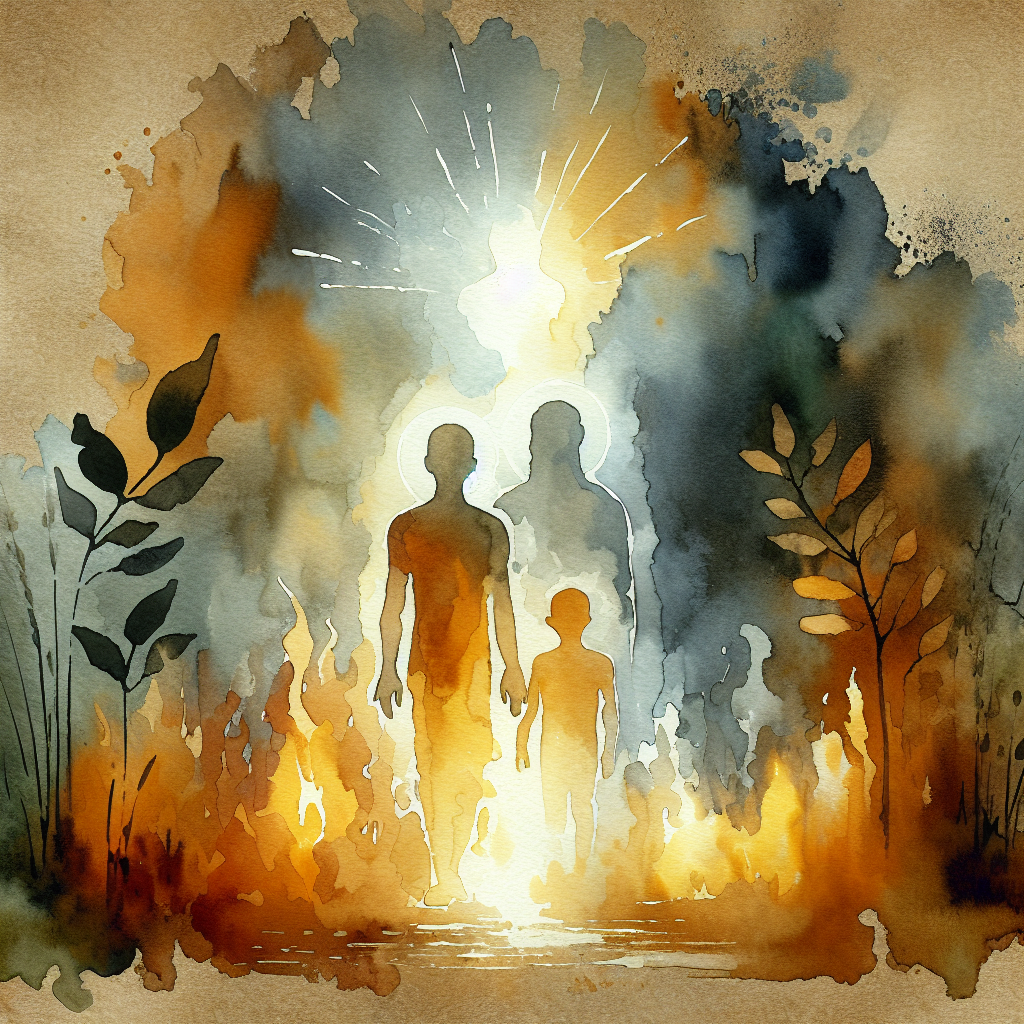
One Body, Many Members: 1 Corinthians 12:12-31
Just as a body, though one, has many parts, but all its many parts form one body, so it is with Christ.
The body. The image that would reshape everything.
One body. Many parts. The diversity didn't threaten the unity. The unity didn't eliminate the diversity. Both held together.
So it is with Christ. The church was Christ's body. Not metaphor only—reality. The many formed the one.
For we were all baptized by one Spirit so as to form one body—whether Jews or Gentiles, slave or free—and we were all given the one Spirit to drink.
All baptized. All—no exceptions. By one Spirit. The Spirit who united. So as to form one body. The purpose of baptism: incorporation.
Whether Jews or Gentiles. The ethnic division transcended. Slave or free. The social division dissolved. The distinctions didn't disappear, but they no longer divided.
Given the one Spirit to drink. Potizo—watered, drenched. The Spirit internalized. One Spirit. Given to all.
Even so the body is not made up of one part but of many.
Not one part but many. Polla mele. The body required diversity. Homogeneity was not the goal.
Now if the foot should say, "Because I am not a hand, I do not belong to the body," it would not for that reason stop being part of the body.
The absurd scenario. The foot speaking. Complaining. I am not a hand. The comparison. The self-deprecation. I do not belong. The false conclusion.
It would not for that reason stop being part of the body. The foot's opinion didn't change the foot's membership. Feeling excluded didn't create exclusion.
And if the ear should say, "Because I am not an eye, I do not belong to the body," it would not for that reason stop being part of the body.
Another absurdity. The ear measuring itself against the eye. Coming up short. Concluding non-membership.
The logic failed. The ear was still an ear. Still part of the body.
If the whole body were an eye, where would the sense of hearing be? If the whole body were an ear, where would the sense of smell be?
The reductio ad absurdum. All eyes? No hearing. All ears? No smell. The uniformity would cripple.
But in fact God has placed the parts in the body, every one of them, just as he wanted them to be.
God has placed. Ho theos etheto. Divine arrangement. Every one of them. Each member. Just as he wanted. Kathos ethelesen. According to his will. His design. His purpose.
The diversity was not accident but intention.
If they were all one part, where would the body be?
The question forced the answer. No body. A collection of identical parts wasn't a body. The organism required difference.
As it is, there are many parts, but one body.
As it is. The actual reality. Many parts. One body. Both true. Both essential.
The eye cannot say to the hand, "I don't need you!" And the head cannot say to the feet, "I don't need you!"
The opposite error. Not inferiority but superiority. The eye dismissing the hand. The head scorning the feet.
I don't need you. Ou chreian sou echo. The arrogance of independence. The denial of interdependence.
On the contrary, those parts of the body that seem to be weaker are indispensable, and the parts that we think are less honorable we treat with special honor.
On the contrary. The reversal. Weaker—indispensable. Less honorable—given special honor. The internal organs. The hidden parts. Essential though unseen.
The Corinthians ranked gifts. Tongues above all. The showy above the humble. Paul inverted the ranking.
And the parts that are unpresentable are treated with special modesty, while our presentable parts need no special treatment.
Unpresentable—covered with modesty. Presentable—no special treatment needed. The body's instinct was to honor what seemed dishonorable.
But God has put the body together, giving greater honor to the parts that lacked it, so that there should be no division in the body, but that its parts should have equal concern for each other.
God has put the body together. Sunekerasen—mixed, blended, composed. Divine design again. Giving greater honor to the parts that lacked it. The compensation. The lifting up.
So that there should be no division. Schisma. The purpose was unity. Equal concern for each other. Merimao huper allelon. Mutual care.
If one part suffers, every part suffers with it; if one part is honored, every part rejoices with it.
The sympathy of the body. Suffering shared. Honor shared. What affected one affected all. The interconnection was complete.
Now you are the body of Christ, and each one of you is a part of it.
The application. You—the Corinthians. Are the body of Christ. Soma Christou. Each one—a part. Individual membership in corporate identity.
And God has placed in the church first of all apostles, second prophets, third teachers, then miracles, then gifts of healing, of helping, of guidance, and of different kinds of tongues.
The list. Ordered. First apostles. Second prophets. Third teachers. The foundational gifts. Then miracles, healing, helping, guidance, tongues. The ranking was Paul's point. Tongues—last. The Corinthians' favorite—at the bottom.
Are all apostles? Are all prophets? Are all teachers? Do all work miracles? Do all have gifts of healing? Do all speak in tongues? Do all interpret?
The rhetorical questions. Me pantes—the Greek expecting "no." Not all apostles. Not all prophets. Not all anything. The diversity required that no gift was universal.
Now eagerly desire the greater gifts.
Desire the greater gifts. Zeloute—be zealous for. The greater gifts. Which were greater? Not tongues. Teaching. Prophecy. The gifts that built up others.
And yet I will show you the most excellent way.
And yet. The transition. Beyond the gifts themselves. The most excellent way. Kath' huperbolēn hodon. A way of surpassing excellence.
Something beyond the gifts.
Something that made the gifts work.
Something the Corinthians were missing.
Love.
The next chapter would reveal it.
But first, the body.
One body.
Many members.
Each placed by God.
Each needed by all.
No division.
Equal concern.
Suffering together.
Rejoicing together.
The body of Christ.
Creative Approach
theological_meditation
Powered by ChurchWiseAI
This illustration is a preview of what our AI-powered ministry platform can do. ChurchWiseAI offers a full suite of tools built for pastors and church leaders.
Sermon Companion
Build entire sermons with AI — outlines, illustrations, application points, and slide decks tailored to your tradition.
Ministry Chatbot
An AI assistant trained on theology, counseling frameworks, and church administration to help with any ministry question.
Bible Study Builder
Generate discussion guides, devotionals, and small group materials from any passage — in minutes, not hours.
Try any app free for 7 days — no credit card required.
Get Started