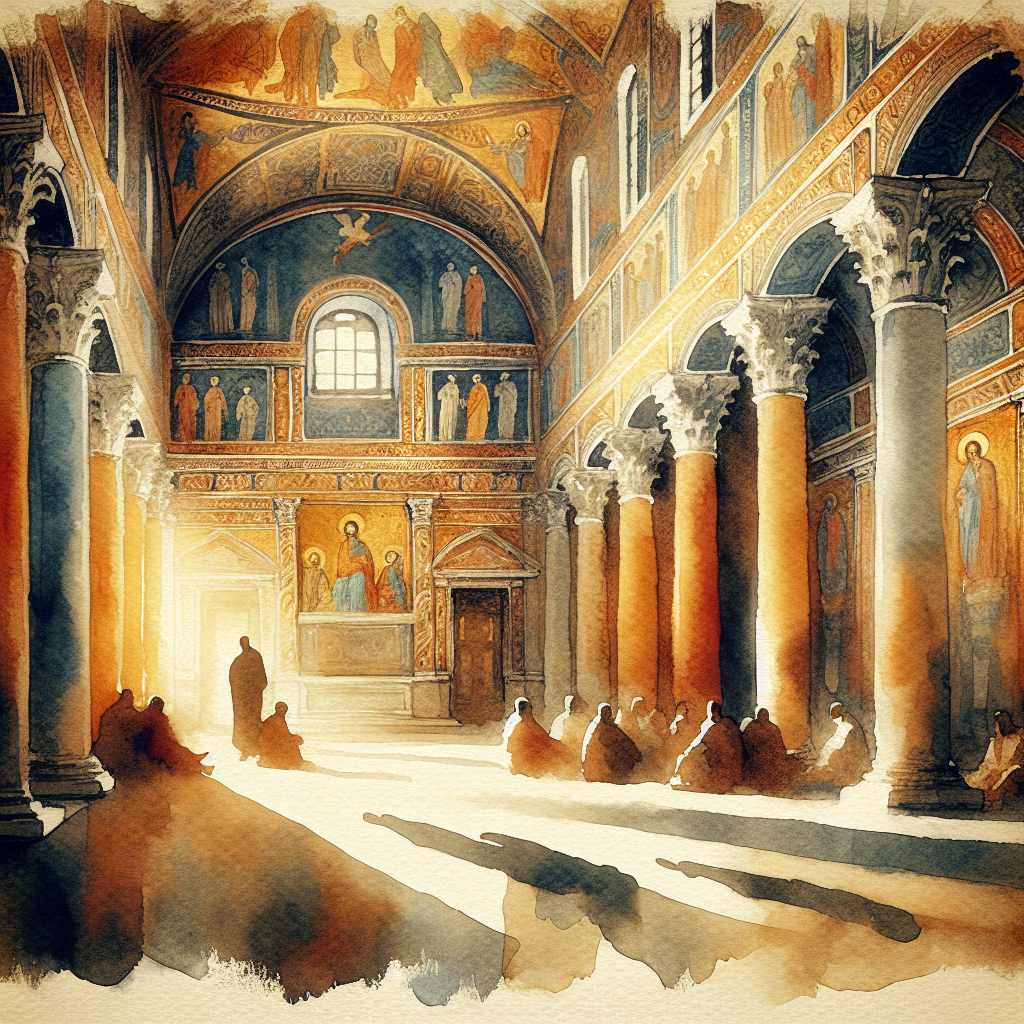
Set Apart From Birth: Galatians 1:11-24
I want you to know, brothers and sisters, that the gospel I preached is not of human origin. I did not receive it from any man, nor was I taught it; rather, I received it by revelation from Jesus Christ.
The Damascus road. Noon sun blazing, dust rising, a man on a mission to destroy the church.
Saul of Tarsus had letters in his bag—authorization from the high priest to arrest any followers of the Way. He had already ravaged the Jerusalem church. Now he was extending his reach to Damascus.
For you have heard of my previous way of life in Judaism, how intensely I persecuted the church of God and tried to destroy it.
Intensely. The word was inadequate. He had dragged men and women from their homes. He had cast votes for their execution. He had breathed threats and murder. The church of God—he tried to destroy it. Annihilate it. Wipe it from the face of the earth.
I was advancing in Judaism beyond many of my own age among my people and was extremely zealous for the traditions of my fathers.
He was the rising star. The protégé of Gamaliel. More zealous than his peers. More devoted to the traditions. More willing to do what others hesitated to do. His advancement was tied to his violence.
But when God, who set me apart from my birth and called me by his grace, was pleased to reveal his Son in me so that I might preach him among the Gentiles...
The light struck without warning.
Brighter than the noon sun—a glory that knocked him to the ground, blinded him, undid everything he thought he knew. A voice from the light: "Saul, Saul, why do you persecute me?"
The answer shattered his world: "I am Jesus, whom you are persecuting."
Jesus. Alive. Risen. Lord.
Set apart from birth. Even his mother's womb had been preparation. All those years of Torah study, all that zeal, all that violence—God had been shaping a vessel. The persecutor would become the apostle. The destroyer would become the builder.
Called by grace. Not because Saul deserved it—he deserved death. Not because Saul sought it—he was running the opposite direction. Grace. Unmerited. Unearned. Unexpected.
Reveal his Son in me. Not just to me—in me. The revelation wasn't just information; it was transformation. Christ revealed within. The mystery that would become Paul's message: Christ in you, the hope of glory.
My immediate response was not to consult any human being. I did not go up to Jerusalem to see those who were apostles before I was, but I went into Arabia. Later I returned to Damascus.
Arabia. The desert. Silence and sand and stars.
For three years—or parts of three years—Paul disappeared. The new convert didn't rush to Jerusalem for apostolic training. He didn't enroll in a discipleship course. He went to Arabia.
What happened there? Paul never said. But a man who had spent his life in books and arguments and debates went to the desert. A man who had defined himself by activity went to stillness. A man who thought he knew everything about God discovered he knew nothing.
The gospel Paul preached was not taught to him by the apostles. It was revealed to him by Christ in the Arabian wilderness.
Then after three years, I went up to Jerusalem to get acquainted with Cephas and stayed with him fifteen days. I saw none of the other apostles—only James, the Lord's brother.
Fifteen days with Peter. Two weeks. That was all. He saw James—the brother of Jesus, who hadn't believed during Jesus' ministry but now led the Jerusalem church. No one else. No extended training. No formal commissioning.
I assure you before God that what I am writing you is no lie.
The oath was unusual. Paul didn't normally swear to the truth of his statements. But the Judaizers had spread lies about his credentials. They said he was dependent on Jerusalem, derivative of the real apostles, secondary at best.
He swore before God: this is the truth.
Then I went to Syria and Cilicia. I was personally unknown to the churches of Judea that are in Christ.
Unknown. The churches of Judea—the heartland of Jewish Christianity—didn't know Paul's face. He wasn't their product. He wasn't their protégé. He had been in Syria and Cilicia, far from Jerusalem, doing the work God called him to do.
They only heard the report: "The man who formerly persecuted us is now preaching the faith he once tried to destroy."
The report traveled without him. The persecutor preaches. The destroyer builds. The wolf has become a shepherd.
And they praised God because of me.
Praised God. Not Paul. God. Because only God could take a murderer and make him a minister. Only God could reverse such a trajectory. Only God could reveal his Son in such an enemy.
The gospel Paul preached was not secondhand. It was not learned in Jerusalem. It was not derived from the apostles. It came by direct revelation from Jesus Christ—on a road, in a desert, in the transformation of a terrorist into an apostle.
And the churches praised God because of him.
Creative Approach
vivid_retelling
Powered by ChurchWiseAI
This illustration is a preview of what our AI-powered ministry platform can do. ChurchWiseAI offers a full suite of tools built for pastors and church leaders.
Sermon Companion
Build entire sermons with AI — outlines, illustrations, application points, and slide decks tailored to your tradition.
Ministry Chatbot
An AI assistant trained on theology, counseling frameworks, and church administration to help with any ministry question.
Bible Study Builder
Generate discussion guides, devotionals, and small group materials from any passage — in minutes, not hours.
Try any app free for 7 days — no credit card required.
Get Started