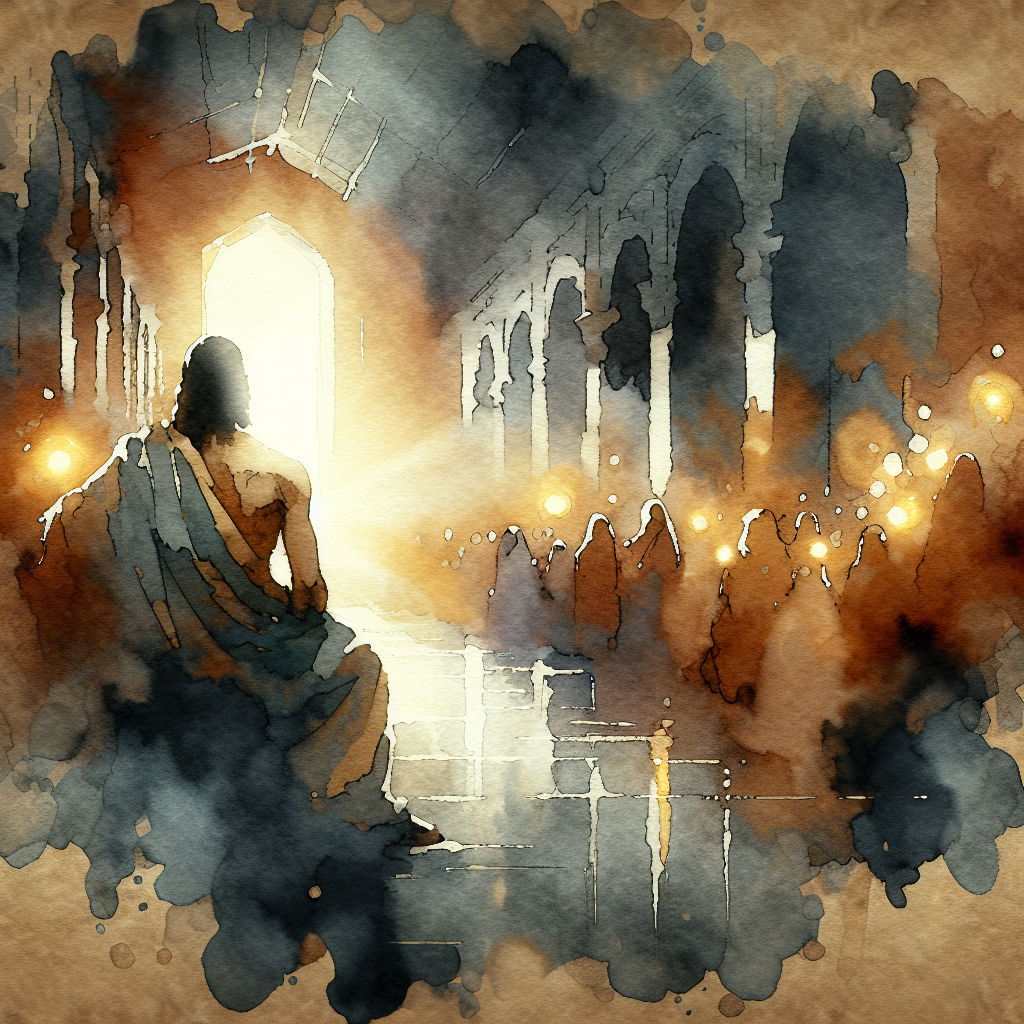
Silver and Gold I Do Not Have: Acts 3:1-10
One day Peter and John were going up to the temple at the time of prayer—at three in the afternoon.
The rhythm of Jewish piety continued. Peter and John—paired so often in the Gospels—now partners in ministry. The temple at three, the hour of evening sacrifice, the hour of prayer.
Now a man who was lame from birth was being carried to the temple gate called Beautiful, where he was put every day to beg from those going into the temple courts.
A man lame from birth. Forty years old, Luke would later note. Never walked. Carried daily—by family, by friends, by those who profited from his begging. The gate called Beautiful—ornate Corinthian bronze, stunning craftsmanship. Beauty and brokenness side by side.
Every day. The same routine. Put there to beg. Coins from the devout entering to worship. Survival on the margins of sacred space.
When he saw Peter and John about to enter, he asked them for money.
The routine request. Eyes scanning sandals—wealthy sandals meant bigger coins. He asked for money. Nothing unusual. Just another day.
Peter looked straight at him, as did John. Then Peter said, Look at us!
But Peter didn't pass. Peter stopped. Looked straight at him—the Greek suggests fixed, intense attention. Not a glance but a gaze. And John too. Look at us. Not the request of a benefactor reaching for a coin purse. Something else.
So the man gave them his attention, expecting to get something from them.
He looked up. Expectation rising. Something was coming. A good donation, perhaps?
Then Peter said, Silver or gold I do not have, but what I do have I give you. In the name of Jesus Christ of Nazareth, walk.
The most famous sentence of the early church. No silver. No gold. Apostolic poverty. But what I do have—authority, power, the name. In the name of Jesus Christ of Nazareth—the full identification. Walk. The command that had never been possible.
Taking him by the right hand, he helped him up, and instantly the man's feet and ankles became strong.
Peter reached down. Took the right hand. Helped him up. And instantly—the Greek emphasizes the immediacy—strength flooded into feet that had never held weight, ankles that had never flexed, muscles that had never functioned.
He jumped to his feet and began to walk.
Jumped. The first movement of his life on his own legs. And then walking—the thing he had watched others do for forty years, the thing he had only imagined. Now his body knew how.
Then he went with them into the temple courts, walking and jumping, and praising God.
Into the temple—through the Beautiful Gate, past the place where he had sat, into the courts he had only glimpsed. Walking. Jumping. Praising. The body that had been his prison became his instrument of worship.
When all the people saw him walking and praising God, they recognized him as the same man who used to sit begging at the temple gate called Beautiful, and they were filled with wonder and amazement at what had happened to him.
The crowd recognized him. Not a stranger, not a setup—the man they had passed daily, dropped coins for, barely noticed. That man. Walking. Jumping. Praising.
Wonder and amazement filled them. Something had happened that couldn't be explained, couldn't be dismissed. The Beautiful Gate had witnessed something more beautiful than bronze.
Powered by ChurchWiseAI
This illustration is a preview of what our AI-powered ministry platform can do. ChurchWiseAI offers a full suite of tools built for pastors and church leaders.
Sermon Companion
Build entire sermons with AI — outlines, illustrations, application points, and slide decks tailored to your tradition.
Ministry Chatbot
An AI assistant trained on theology, counseling frameworks, and church administration to help with any ministry question.
Bible Study Builder
Generate discussion guides, devotionals, and small group materials from any passage — in minutes, not hours.
Try any app free for 7 days — no credit card required.
Get Started