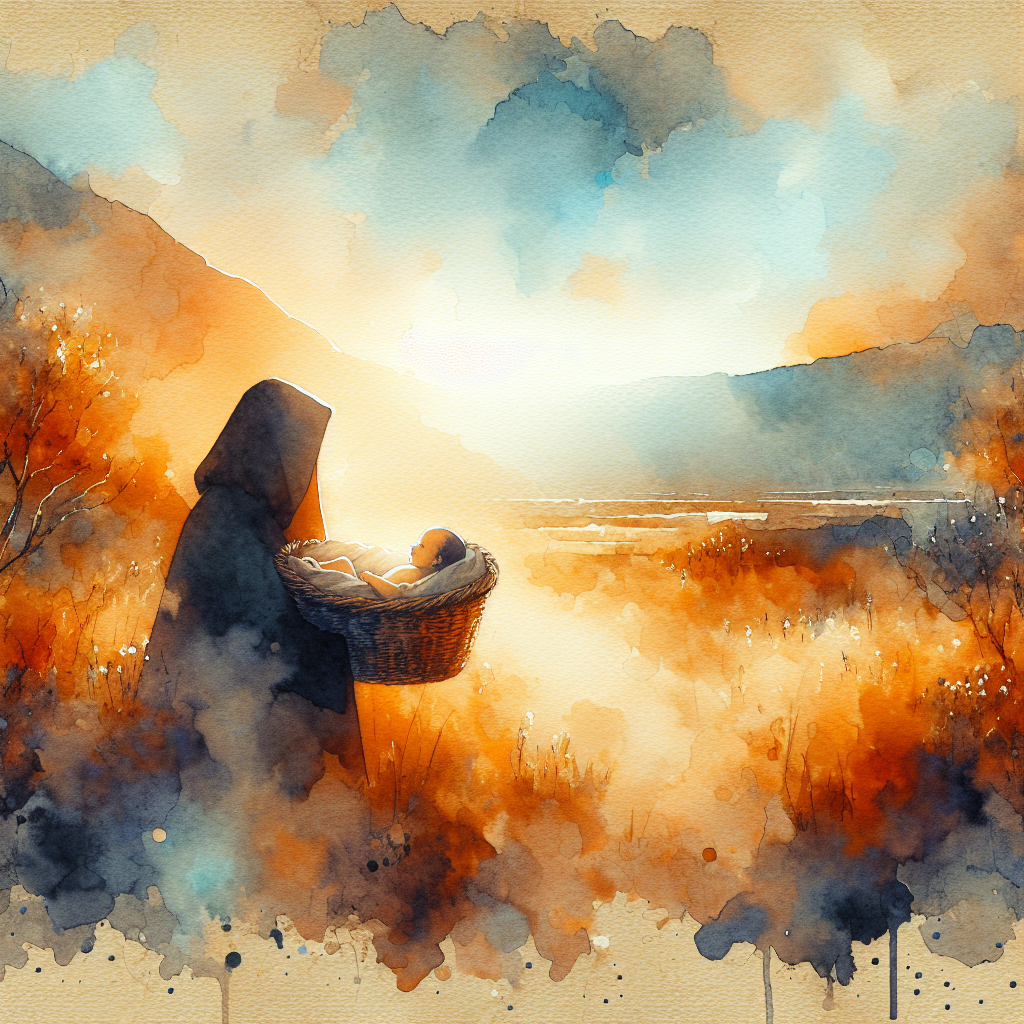
The Baby in the Basket: Exodus 2:1-10
Now a man of the tribe of Levi married a Levite woman, and she became pregnant and gave birth to a son.
In the midst of genocide, life continued. A Levite couple. A pregnancy. A son born into a death sentence.
When she saw that he was a fine child, she hid him for three months.
Fine—the Hebrew suggests goodness, beauty. Tov—the same word God used for creation. She saw he was good. And so she defied Pharaoh's order.
Three months of hidden cries. Three months of muffled nursing. Three months of terror at every Egyptian footstep.
But when she could hide him no longer, she got a papyrus basket for him and coated it with tar and pitch.
The hiding could not last. A growing baby makes growing noise. So she built an ark—the same Hebrew word used for Noah's vessel. A tiny ark for a tiny deliverer.
Tar and pitch. Waterproofing. The same materials that kept Noah's family above the flood would keep this baby above the Nile.
Then she placed the child in it and put it among the reeds along the bank of the Nile.
Into the very waters of death. But not thrown—placed. Among the reeds—hidden, protected, positioned. The mother obeyed Pharaoh's letter while defying his intent. The boy went into the Nile. But alive.
His sister stood at a distance to see what would happen to him.
Miriam watching. Big sister keeping vigil. What would happen? The question hung over the floating basket.
Then Pharaoh's daughter went down to the Nile to bathe, and her attendants were walking along the riverbank.
The most dangerous woman in Egypt, from an Israelite perspective. Pharaoh's daughter. At the river. Moving toward the basket.
She saw the basket among the reeds and sent her female slave to get it. She opened it and saw the baby. He was crying, and she felt sorry for him. This is one of the Hebrew babies, she said.
She knew. One look at the crying infant and she knew—Hebrew baby, death sentence, someone's desperate hope floating in the reeds. This is one of the Hebrew babies.
She felt sorry for him. Compassion from the least expected source. The daughter of the genocidal king, moved by a baby's tears.
Then his sister asked Pharaoh's daughter, Shall I go and get one of the Hebrew women to nurse the baby for you?
Miriam's courage. Approaching royalty. Making an offer that served everyone's interests. Shall I find a nurse?
Yes, go, she answered. So the girl went and got the baby's mother.
The mother hired to nurse her own son. Paid by Pharaoh's household to raise the deliverer of Israel. The irony cascades.
Pharaoh's daughter said to her, Take this baby and nurse him for me, and I will pay you.
Take him. Nurse him. I will pay you. The death sentence reversed. The condemned child now protected by palace wages.
So the woman took the baby and nursed him.
His mother nursed him. Sang to him. Told him the stories of Abraham, Isaac, Jacob. Planted Hebrew identity in his heart while Egyptian gold paid the bills.
When the child grew older, she took him to Pharaoh's daughter and he became her son.
The handoff. From Hebrew home to Egyptian palace. From slave quarters to royal chambers. The boy would learn both worlds.
She named him Moses, saying, I drew him out of the water.
Moses—the name sounds like the Hebrew for "draw out." Pharaoh's daughter named him. But God had already named his purpose: this one drawn from water would draw a nation from slavery.
The baby who should have drowned in the Nile was drawn from the Nile. The grandson of Pharaoh would destroy Pharaoh's power. The waters of death became the waters of destiny.
Powered by ChurchWiseAI
This illustration is a preview of what our AI-powered ministry platform can do. ChurchWiseAI offers a full suite of tools built for pastors and church leaders.
Sermon Companion
Build entire sermons with AI — outlines, illustrations, application points, and slide decks tailored to your tradition.
Ministry Chatbot
An AI assistant trained on theology, counseling frameworks, and church administration to help with any ministry question.
Bible Study Builder
Generate discussion guides, devotionals, and small group materials from any passage — in minutes, not hours.
Try any app free for 7 days — no credit card required.
Get Started