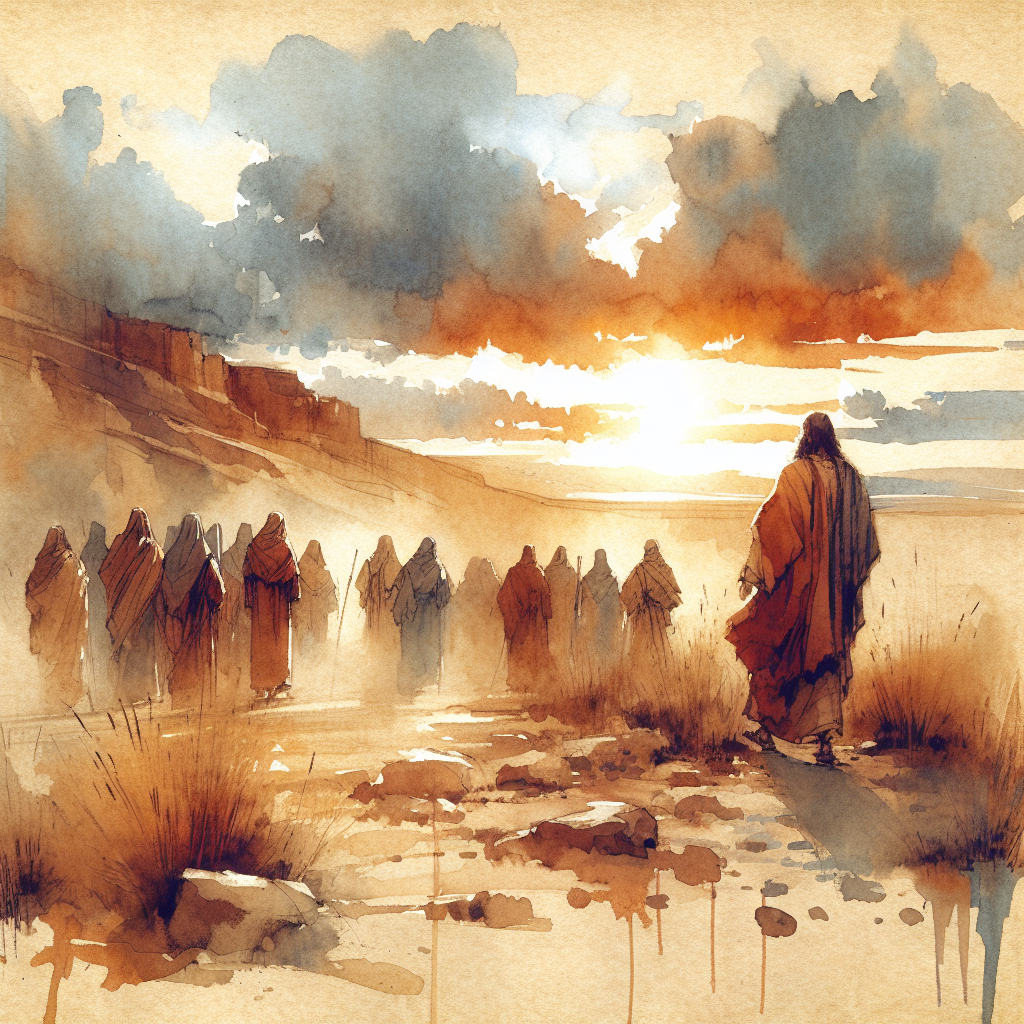
The Desert Road: Acts 8:26-40
Now an angel of the Lord said to Philip, Go south to the road—the desert road—that goes down from Jerusalem to Gaza.
Philip—not the apostle but the evangelist, one of the seven with Stephen. He had been successful in Samaria, seeing revival, baptizing many. Now: go south. To the desert road. Away from the crowds. Toward apparently nothing.
So he started out, and on his way he met an Ethiopian eunuch, an important official in charge of all the treasury of the Kandake (which means queen of the Ethiopians). This man had gone to Jerusalem to worship.
An Ethiopian—from the edge of the known world. A eunuch—excluded by Deuteronomy from the assembly. An official—treasurer for the queen. He had traveled to Jerusalem to worship the God who excluded him from the inner courts.
And on his way home was sitting in his chariot reading the Book of Isaiah the prophet.
Returning home. In his chariot—wealthy enough for a vehicle and driver. Reading Isaiah—a scroll unrolled, precious, personal. A God-seeker studying God's word.
The Spirit told Philip, Go to that chariot and stay near it.
The Spirit's direction—specific. Not just the road but the chariot. Not just observe but approach. The divine appointment arranged.
Then Philip ran up to the chariot and heard the man reading Isaiah the prophet. Do you understand what you are reading? Philip asked.
Philip ran—eagerness, urgency. The Ethiopian was reading aloud—the custom of the time. Isaiah's words audible. Philip's question: Do you understand?
How can I, he said, unless someone explains it to me?
The humble answer. How can I? The need acknowledged. Unless someone explains. The invitation implicit. So he invited Philip to come up and sit with him.
Philip climbed in. Side by side in the chariot. The desert road. The scroll of Isaiah. The conversation that would change everything.
This is the passage of Scripture the eunuch was reading: He was led like a sheep to the slaughter, and as a lamb before its shearer is silent, so he did not open his mouth. In his humiliation he was deprived of justice. Who can speak of his descendants? For his life was taken from the earth.
Isaiah 53. The suffering servant. Led like a sheep. Silent before slaughter. Humiliated. Deprived of justice. No descendants. Life taken.
The eunuch asked Philip, Tell me, please, who is the prophet talking about, himself or someone else?
The right question. Who is this? Isaiah himself? Some other figure? The passage demanded identification.
Then Philip began with that very passage of Scripture and told him the good news about Jesus.
Philip began there. Isaiah 53 became the bridge. The suffering servant was Jesus. Led to slaughter—the cross. Silent before accusers—the trials. Humiliated—the mockery. Life taken—the death. But there was more: resurrection, vindication, salvation.
Philip told him the good news about Jesus.
As they traveled along the road, they came to some water and the eunuch said, Look, here is water. What can stand in the way of my being baptized?
Water appeared—an oasis, a spring, a pool. The eunuch saw it and saw his opportunity. What stands in the way? What barrier remains? The law said eunuchs couldn't enter the assembly. But the gospel said whosoever believes.
And he gave orders to stop the chariot. Then both Philip and the eunuch went down into the water and Philip baptized him.
The chariot stopped. Both descended into the water. The excluded eunuch baptized into the inclusive family. The barrier broken. The Ethiopian included.
When they came up out of the water, the Spirit of the Lord suddenly took Philip away, and the eunuch did not see him again, but went on his way rejoicing.
Suddenly—the Spirit snatched Philip away. The eunuch looked and Philip was gone. No goodbye, no follow-up plan. But no dismay either. The eunuch went on his way rejoicing. He had Scripture, he had the Spirit, he had baptism. He went home to Ethiopia with good news.
Philip, however, appeared at Azotus and traveled about, preaching the gospel in all the towns until he reached Caesarea.
Philip found himself at Azotus—miles away. He continued preaching, continued traveling. The desert road encounter was one divine appointment among many.
The Ethiopian carried the gospel south. Tradition says Ethiopia became Christian through his witness. The excluded one became the includer. The desert road led to the ends of the earth.
Powered by ChurchWiseAI
This illustration is a preview of what our AI-powered ministry platform can do. ChurchWiseAI offers a full suite of tools built for pastors and church leaders.
Sermon Companion
Build entire sermons with AI — outlines, illustrations, application points, and slide decks tailored to your tradition.
Ministry Chatbot
An AI assistant trained on theology, counseling frameworks, and church administration to help with any ministry question.
Bible Study Builder
Generate discussion guides, devotionals, and small group materials from any passage — in minutes, not hours.
Try any app free for 7 days — no credit card required.
Get Started