The Elder's Household: Qualifications Lived
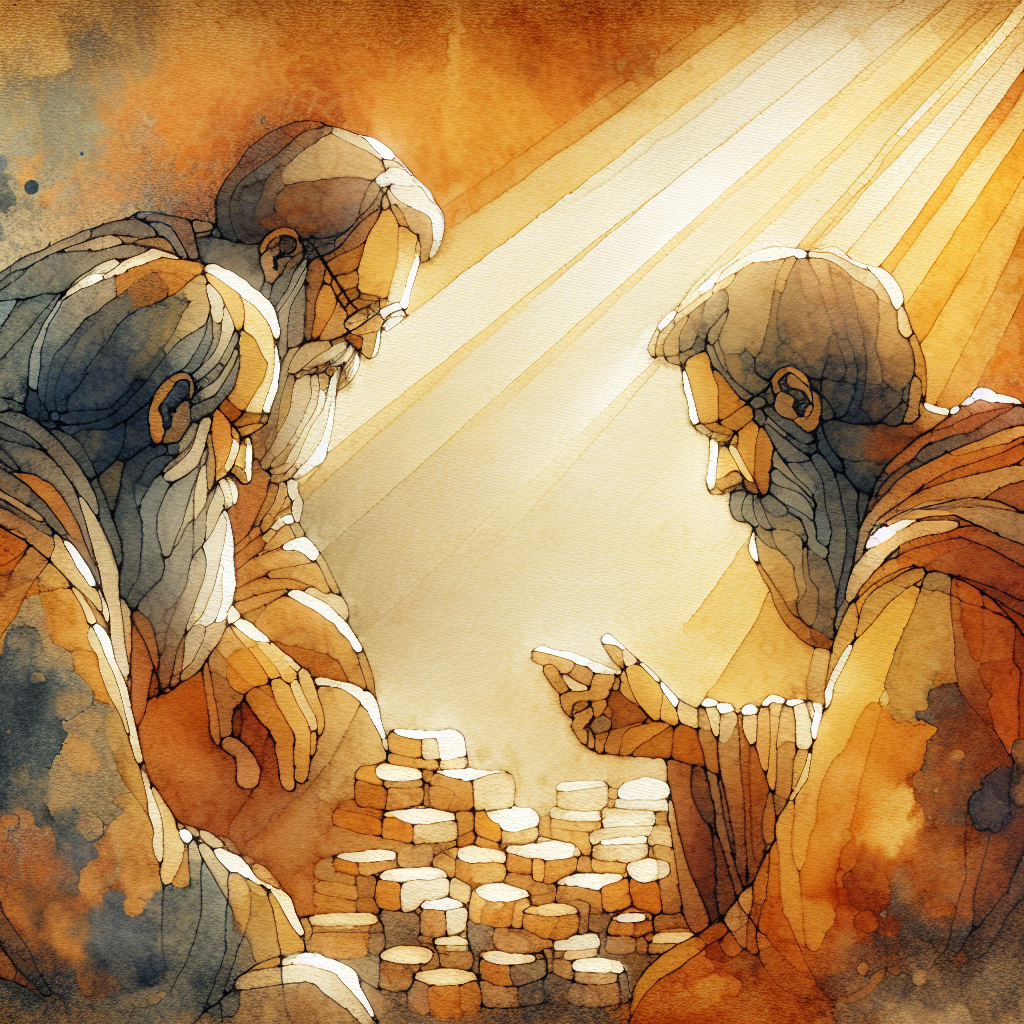
Marcus wants to be an overseer.
He told Timothy last week, after the gathering dispersed and the bread was cleared. "I feel called," he said, eyes bright with ambition. "I can teach. I know the Scriptures. I'm ready."
Timothy listened. Nodded. Said he would pray.
Now, with Paul's letter in hand, Timothy knows what questions to ask.
---
"Here is a trustworthy saying: Whoever aspires to be an overseer desires a noble task."
καλοῦ ἔργου ἐπιθυμεῖ—desires a noble work. The aspiration itself is good. Leadership in Christ's church is worth wanting. Paul doesn't dismiss Marcus's ambition; he redirects it.
"Now the overseer is to be above reproach..."
ἀνεπίλημπτον—above reproach. Blameless. Not sinless—no one qualifies on that count—but without obvious stain, without scandal that would discredit the gospel. Marcus's reputation in the city matters. What do the silversmiths say about him? What do his neighbors know?
"...faithful to his wife..."
μιᾶς γυναικὸς ἄνδρα—a one-woman man. Sexual fidelity. Marital devotion. In Ephesus, with its temple prostitution and casual attitudes toward conjugal loyalty, this standard stands out. Marcus has been married twelve years. Is his devotion unquestioned?
"...temperate, self-controlled, respectable, hospitable, able to teach..."
The list accelerates. νηφάλιον—clear-headed, not muddled by excess. σώφρονα—self-controlled, mastering impulses. κόσμιον—respectable, orderly in life. φιλόξενον—hospitable, loving strangers, opening his home. διδακτικόν—able to teach, skilled in instruction.
Marcus can teach. That's what he led with. But can he control himself? Is his home open? Is his life orderly?
"...not given to drunkenness, not violent but gentle, not quarrelsome, not a lover of money."
More negatives. μὴ πάροινον—not addicted to wine. μὴ πλήκτην—not a striker, not given to physical violence. ἀλλὰ ἐπιεικῆ—but gentle, yielding, reasonable. ἄμαχον—not quarrelsome, not picking fights. ἀφιλάργυρον—not loving silver, not greedy.
Timothy thinks of the conflict last month—Marcus raising his voice at Demetrius over a matter of business. Quarrelsome? Perhaps. Gentle? Not in that moment.
"He must manage his own family well and see that his children obey him, and he must do so in a manner worthy of full respect."
τοῦ ἰδίου οἴκου καλῶς προϊστάμενον—managing his own household well. The household was the basic unit of ancient society—not just wife and children but slaves, clients, extended family. How does Marcus govern this miniature community?
"If anyone does not know how to manage his own family, how can he take care of God's church?"
The logic is simple. The household is training ground. If chaos reigns at home, chaos will follow into church leadership. The skills transfer—or their absence transfers.
"He must not be a recent convert, or he may become conceited and fall under the same judgment as the devil."
νεόφυτον—a new plant, freshly sprouted. Recent converts lack roots. Success might go to their heads. τυφωθείς—puffed up, swollen with smoke, clouded by pride. The devil's judgment came from pride; new leaders are vulnerable to the same.
Marcus was baptized six years ago. Not new. But has he been tested? Has he led under pressure?
"He must also have a good reputation with outsiders, so that he will not fall into disgrace and into the devil's trap."
Outsiders. τῶν ἔξωθεν. The pagan neighbors, the marketplace acquaintances, the people who'll never enter the church but who watch its leaders. Their testimony matters. The devil sets traps using the church's poor reputation.
---
Timothy turns to the next section. Deacons.
"In the same way, deacons are to be worthy of respect, sincere, not indulging in much wine, and not pursuing dishonest gain."
διακόνους—servants. Those who serve tables, manage practical needs, bridge the gap between worship and daily life. They need respect, sincerity, sobriety, honesty.
"They must keep hold of the deep truths of the faith with a clear conscience."
The mystery of the faith—τὸ μυστήριον τῆς πίστεως—held in clean conscience. Deacons aren't merely practical functionaries; they must understand and embody the gospel they serve.
"They must first be tested; and then if there is nothing against them, let them serve as deacons."
δοκιμαζέσθωσαν πρῶτον—let them be tested first. Probation. Observation. Time to reveal what's hidden. Only after passing: service.
"In the same way, the women are to be worthy of respect, not malicious talkers but temperate and trustworthy in everything."
Women—γυναῖκας. Deaconesses? Deacons' wives? The text is ambiguous. Either way, female servants of the church must meet similar standards: respected, not slanderous, sober, faithful.
"A deacon must be faithful to his wife and must manage his children and his household well. Those who have served well gain an excellent standing and great assurance in their faith."
The same household standard as overseers. The same test of domestic competence. And a promise: faithful service yields standing and confidence. βαθμὸν καλὸν—a good step, a promotion in honor. παρρησίαν πολλὴν—much boldness in faith.
---
Timothy sets down the letter. His mind is already moving toward conversations.
Marcus—the questions that need asking. What do your neighbors say? How goes your marriage? That argument with Demetrius—have you made peace?
The widows who might serve as deaconesses. Lydia, perhaps—respected, temperate, managing her household with quiet competence.
The new convert who wants responsibility too quickly. Patience. Testing. Roots need time to grow.
But Paul isn't finished. One more paragraph, and it reorients everything:
"Although I hope to come to you soon, I am writing you these instructions so that, if I am delayed, you will know how people ought to conduct themselves in God's household, which is the church of the living God, the pillar and foundation of the truth."
God's household. οἶκος θεοῦ. The church isn't Marcus's household or Timothy's organization. It belongs to the living God. And it serves as pillar and foundation of truth—στῦλος καὶ ἑδραίωμα τῆς ἀληθείας. What stands on this foundation? The truth. What holds up that truth? This community.
The stakes of leadership could not be higher.
"Beyond all question, the mystery from which true godliness springs is great:
He appeared in the flesh,
was vindicated by the Spirit,
was seen by angels,
was preached among the nations,
was believed on in the world,
was taken up in glory."
A hymn. A confession. Six lines capturing the arc of Christ's story.
Appeared in flesh—the incarnation. Vindicated by Spirit—the resurrection. Seen by angels—cosmic witnesses. Preached among nations—the mission spreading. Believed in the world—faith taking root everywhere. Taken up in glory—the ascension.
This is the mystery the church guards. This is the truth the pillar supports. This is what overseer and deacon alike must embody, teach, protect.
Marcus wants to lead.
Does he grasp what he's leading?
Creative Approach
experiential_vignette
Powered by ChurchWiseAI
This illustration is a preview of what our AI-powered ministry platform can do. ChurchWiseAI offers a full suite of tools built for pastors and church leaders.
Sermon Companion
Build entire sermons with AI — outlines, illustrations, application points, and slide decks tailored to your tradition.
Ministry Chatbot
An AI assistant trained on theology, counseling frameworks, and church administration to help with any ministry question.
Bible Study Builder
Generate discussion guides, devotionals, and small group materials from any passage — in minutes, not hours.
Try any app free for 7 days — no credit card required.
Get Started