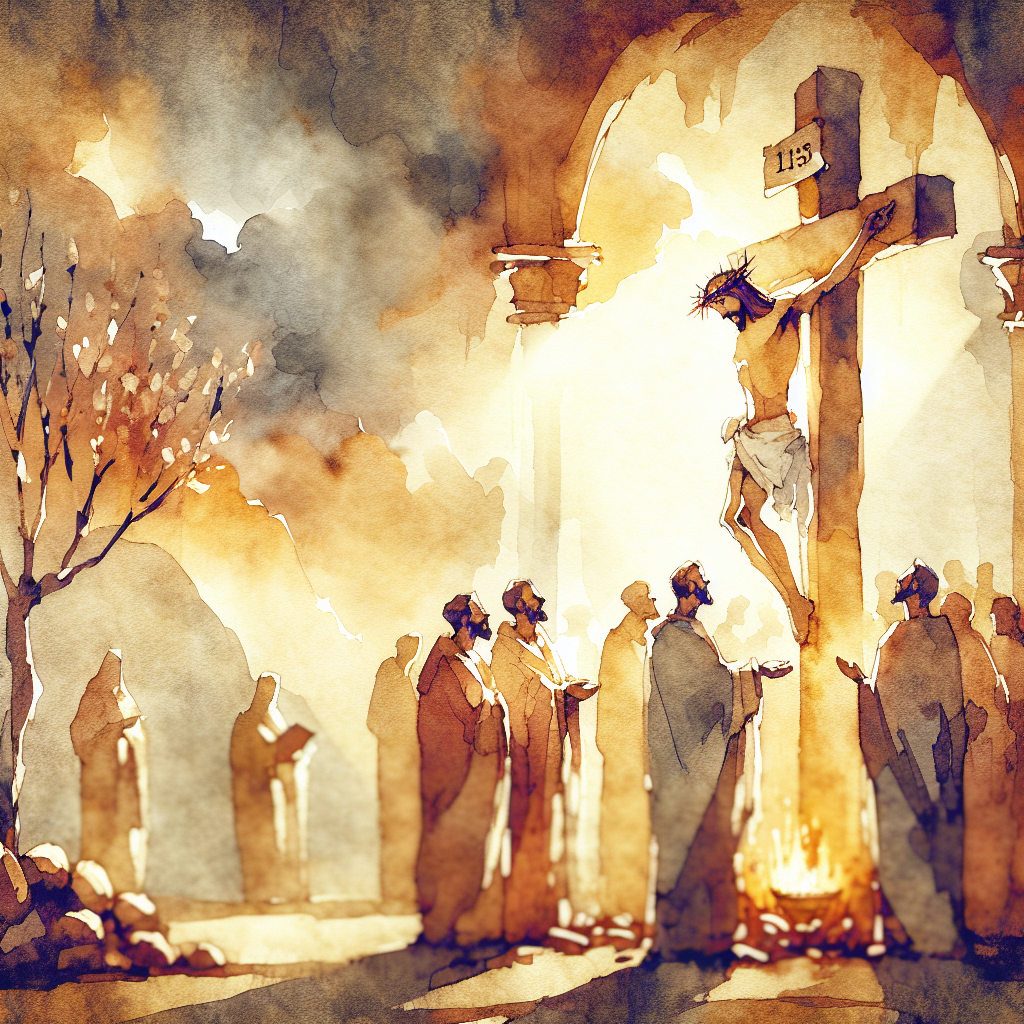
The Foolishness of God: 1 Corinthians 1:18-31
For the message of the cross is foolishness to those who are perishing, but to us who are being saved it is the power of God.
Two audiences. Two responses.
The message of the cross. Ho logos tou staurou. The word about the cross. The proclamation of a crucified Messiah.
Foolishness. Moria. Absurdity. Idiocy. To those who are perishing—the ones on the road to destruction—the cross was laughable. A crucified savior? A god who died? Nonsense.
But to us who are being saved. Present tense. Being saved. The ongoing rescue. To us—it is the power of God. Dunamis theou. The dynamite of God. The same message—opposite assessments.
For it is written: "I will destroy the wisdom of the wise; the intelligence of the intelligent I will frustrate."
Isaiah's words, quoted. God would overturn human wisdom. The clever would be confounded. The intelligent would be thwarted.
Where is the wise person? Where is the teacher of the law? Where is the philosopher of this age? Has not God made foolish the wisdom of the world?
The taunt. Where is the wise person? Sophos—the Greek philosopher. Where is the teacher of the law? Grammateus—the Jewish scribe. Where is the philosopher of this age? Suzetetes—the debater, the disputant.
Has not God made foolish the wisdom of the world? Moraino—made foolish, shown to be foolish. The world's wisdom, for all its sophistication, could not find God.
For since in the wisdom of God the world through its wisdom did not know him, God was pleased through the foolishness of what was preached to save those who believe.
The divine strategy. In the wisdom of God. God's wisdom designed it this way. The world through its wisdom did not know him. Philosophy failed. Speculation failed. Human reasoning failed.
God was pleased through the foolishness of what was preached. The morias tou kerugmatos—the foolishness of the proclamation. The ridiculous message. To save those who believe. Faith, not philosophy.
Jews demand signs and Greeks look for wisdom, but we preach Christ crucified: a stumbling block to Jews and foolishness to Gentiles.
Jews demand signs. Semeia—miraculous proofs. Show us power. Demonstrate divine intervention.
Greeks look for wisdom. Sophia—philosophical sophistication. Explain the system. Give us a coherent worldview.
But we preach Christ crucified. Neither sign nor wisdom. A crucified man. Christos estauromenos.
A stumbling block to Jews. Skandalon—the trigger of a trap, the offense. A crucified Messiah was cursed, not crowned. Offensive.
Foolishness to Gentiles. Moria again. A dying god? A weak savior? Ridiculous.
But to those whom God has called, both Jews and Greeks, Christ the power of God and the wisdom of God.
But to those whom God has called. The called ones—kletos. Those summoned by God. Both Jews and Greeks. The ethnicity didn't matter.
Christ the power of God and the wisdom of God. The very thing the Jews and Greeks sought—but not in the form they expected. Power in weakness. Wisdom in foolishness. Christ crucified.
For the foolishness of God is wiser than human wisdom, and the weakness of God is stronger than human strength.
The comparison that shattered categories.
The foolishness of God—if God had any foolishness—would still exceed human wisdom.
The weakness of God—if God had any weakness—would still surpass human strength.
But God had no foolishness. The cross only appeared foolish. God had no weakness. The cross only appeared weak.
Brothers and sisters, think of what you were when you were called. Not many of you were wise by human standards; not many were influential; not many were of noble birth.
The Corinthians as exhibit A. Not many wise. The philosophers weren't flocking to faith. Not many influential. The powerful stayed away. Not many of noble birth. The aristocrats weren't interested.
The church was filled with the lowly. The slaves. The laborers. The women. The nobodies.
But God chose the foolish things of the world to shame the wise; God chose the weak things of the world to shame the strong.
God chose. Exelexato—selected, picked out. The foolish things. The weak things. To shame the wise. To shame the strong. The divine irony. The upside-down kingdom.
God chose the lowly things of this world and the despised things—and the things that are not—to nullify the things that are.
The lowly. Agene—without nobility, base. The despised. Exouthenemena—counted as nothing. And the things that are not. Ta me onta—the non-existent, the nothings.
To nullify the things that are. Katargeo—to render powerless, to abolish. The somebodies undone by the nobodies.
So that no one may boast before him.
The purpose. No boasting. No human pride. Nothing to claim credit for. Before him—in God's presence. Silence.
It is because of him that you are in Christ Jesus, who has become for us wisdom from God—that is, our righteousness, holiness and redemption.
Because of him. Ex autou—from him, by his doing. You are in Christ Jesus. Location. Union.
Who has become for us wisdom from God. Christ is God's wisdom—the wisdom the Greeks sought was a person.
That is. Defined. Righteousness. Holiness. Redemption. Christ was all of it. Everything needed—in him.
Therefore, as it is written: "Let the one who boasts boast in the Lord."
The conclusion. Jeremiah's words. If boasting must happen, let it be in the Lord. Not in wisdom. Not in strength. Not in status.
In the Lord.
The foolish cross.
The weak God.
The wisdom that shamed the wise.
The power that toppled the strong.
Let no one boast.
Except in Christ crucified.
Creative Approach
theological_meditation
Powered by ChurchWiseAI
This illustration is a preview of what our AI-powered ministry platform can do. ChurchWiseAI offers a full suite of tools built for pastors and church leaders.
Sermon Companion
Build entire sermons with AI — outlines, illustrations, application points, and slide decks tailored to your tradition.
Ministry Chatbot
An AI assistant trained on theology, counseling frameworks, and church administration to help with any ministry question.
Bible Study Builder
Generate discussion guides, devotionals, and small group materials from any passage — in minutes, not hours.
Try any app free for 7 days — no credit card required.
Get Started