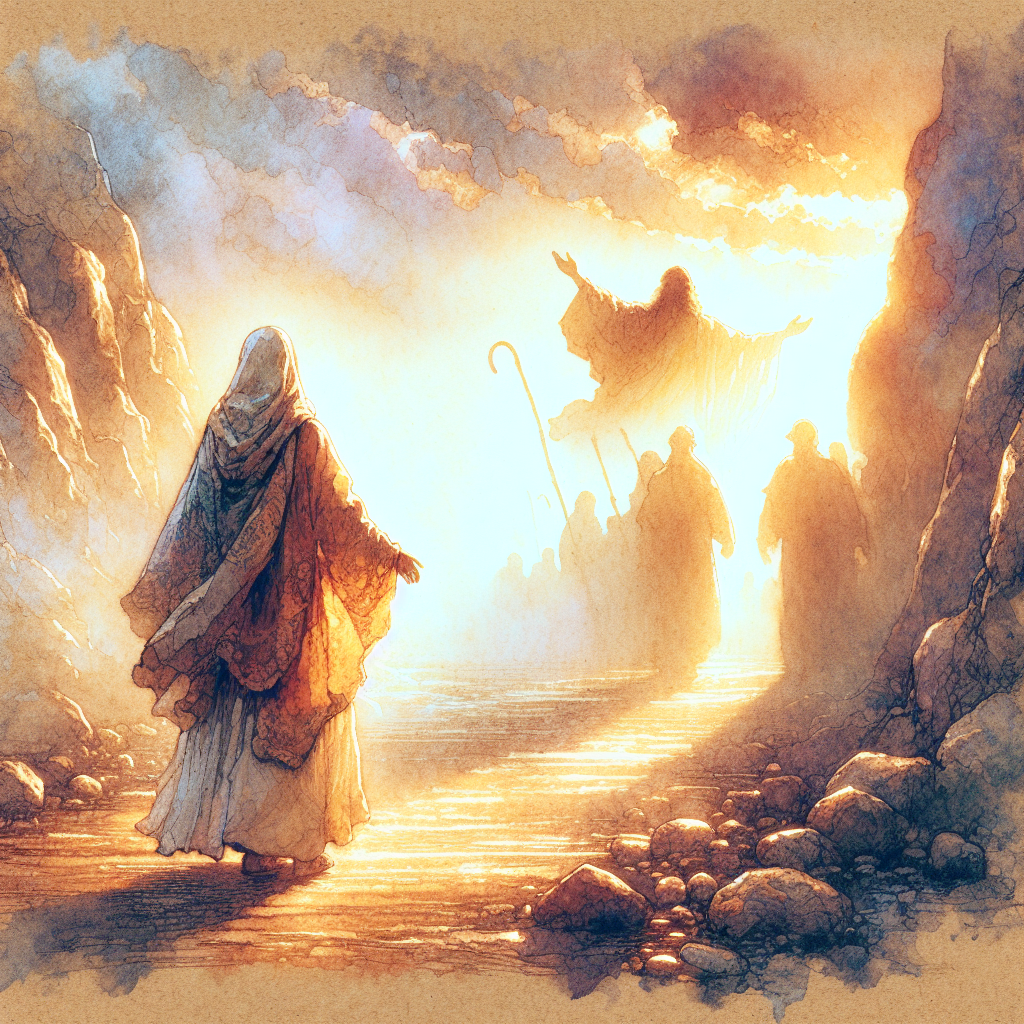
The God Who Sees: Genesis 16:1-16
Now Sarai, Abram's wife, had borne him no children.
Ten years in Canaan. Ten years since the promise. Ten years of waiting for a child who never came. Sarai's hope had curdled into strategy.
But she had an Egyptian slave named Hagar; so she said to Abram, "The LORD has kept me from having children. Go, sleep with my slave; perhaps I can build a family through her."
The custom was ancient and accepted. A barren wife could give her slave to her husband, and any child born would be legally hers. Sarai was not abandoning the promise—she was trying to help it along.
Abram agreed to what Sarai said.
No argument. No consultation with God. No waiting for clarification. He simply agreed. The man who had believed God about the stars now took matters into his own hands.
He slept with Hagar, and she conceived.
What Sarai could not do in eighty-five years, Hagar accomplished in one night. And the moment Hagar knew she was pregnant, everything changed.
When she knew she was pregnant, she began to despise her mistress.
Power shifted. The slave who carried the heir looked at the mistress who could not, and contempt crept into her eyes. The household that had waited for promise now fractured with resentment.
Then Sarai said to Abram, "You are responsible for the wrong I am suffering. I put my slave in your arms, and now that she knows she is pregnant, she despises me. May the LORD judge between you and me."
The blame flew. Sarai who had proposed the plan now blamed Abram for its consequences. The patriarch's home became a war zone.
"Your slave is in your hands," Abram said. "Do with her whatever you think best."
Abdication. Abram handed the problem back to Sarai, washing his hands of a mess he had helped create.
Then Sarai mistreated Hagar; so she fled from her.
Mistreated. The Hebrew word suggests harsh oppression—the same word would later describe Egypt's treatment of Israel. The pregnant slave fled into the wilderness, alone, desperate, running toward death.
The angel of the LORD found her near a spring in the desert.
Found her. In the emptiness, in the nowhere, by a spring she had stumbled upon—God's messenger tracked her down. No one goes far enough to escape divine notice.
"Hagar, slave of Sarai, where have you come from, and where are you going?"
"I'm running away from my mistress Sarai," she answered.
Then the angel of the LORD told her, "Go back to your mistress and submit to her."
Not the answer she wanted. Return to the abuse. Submit to the oppressor. But God had a plan.
The angel added, "I will increase your descendants so much that they will be too numerous to count."
A promise parallel to Abraham's. Stars for Abraham, innumerable descendants for Hagar. The slave woman received the same language as the patriarch.
"You are now pregnant and you will give birth to a son. You shall name him Ishmael, for the LORD has heard of your misery."
Ishmael: "God hears." In her misery, by a spring in the desert, a pregnant runaway learned that God listened to slaves.
She gave this name to the LORD who spoke to her: "You are the God who sees me," for she said, "I have now seen the One who sees me."
El Roi—the God who sees. Hagar became the first person in Scripture to give God a name. Not Abraham, not the patriarchs—a foreign slave woman, naming the One who found her in the wilderness.
That is why the well was called Beer Lahai Roi; it is still there, between Kadesh and Bered.
"The well of the Living One who sees me." A monument in the desert to divine attention. God saw. God heard. God found her.
So Hagar bore Abram a son, and Abram gave the name Ishmael to the son she had borne. Abram was eighty-six years old when Hagar bore him Ishmael.
Thirteen more years would pass before Isaac. Thirteen years with the wrong son as the only son. But Ishmael was not forgotten—God had made promises about him too.
The God who sees does not look away.
Powered by ChurchWiseAI
This illustration is a preview of what our AI-powered ministry platform can do. ChurchWiseAI offers a full suite of tools built for pastors and church leaders.
Sermon Companion
Build entire sermons with AI — outlines, illustrations, application points, and slide decks tailored to your tradition.
Ministry Chatbot
An AI assistant trained on theology, counseling frameworks, and church administration to help with any ministry question.
Bible Study Builder
Generate discussion guides, devotionals, and small group materials from any passage — in minutes, not hours.
Try any app free for 7 days — no credit card required.
Get Started