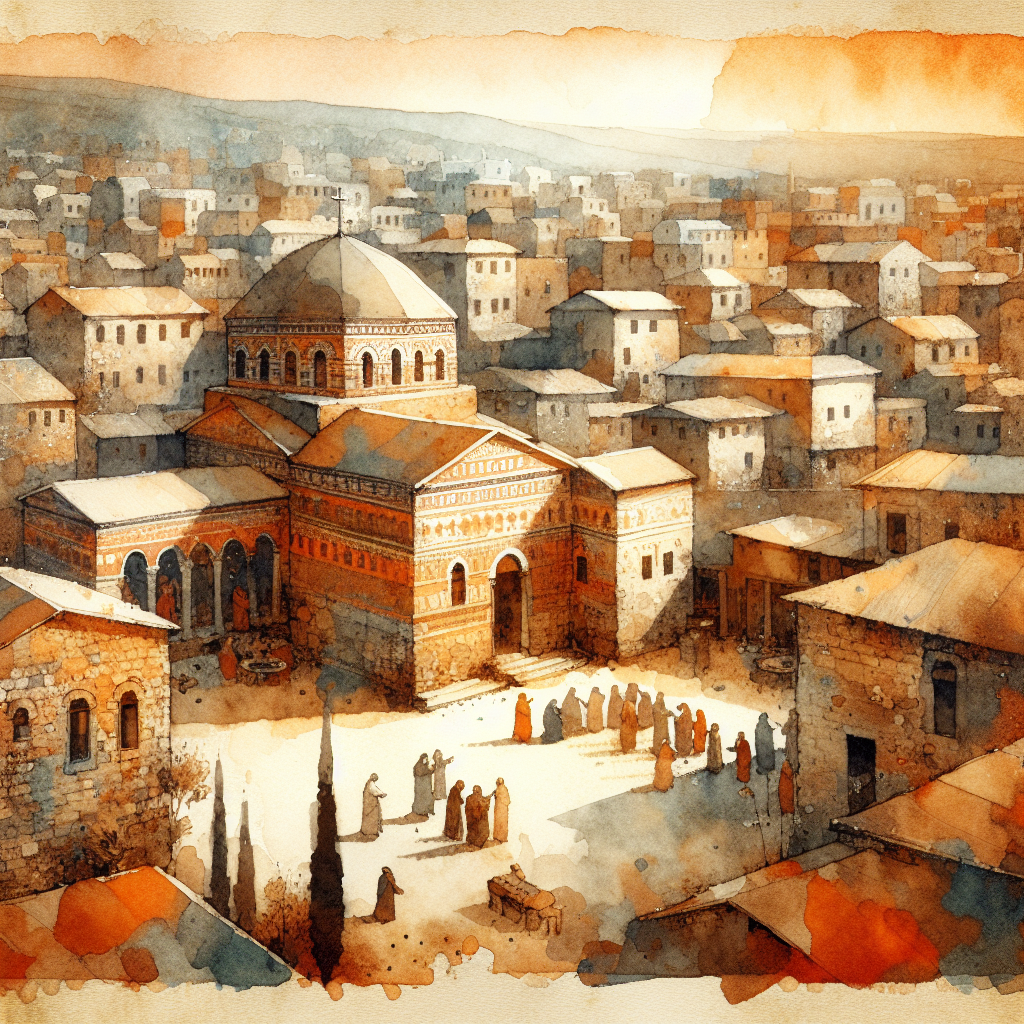
The House on the Hill: Philemon's Church in Colossae
The house stands on the eastern slope of Colossae, catching the morning light that spills across the Lycus Valley. Not the grandest home in the city—that distinction belongs to the wool merchants whose fortunes rise and fall with the famous purple dye. But Philemon's house has become something else entirely. A gathering place. A sanctuary.
Every Lord's Day, the courtyard fills.
Slaves slip in through the servants' entrance, still bearing the marks of their morning labor. Freedmen arrive next, that uncertain class caught between worlds. Then the artisans, the shopkeepers, the occasional Roman citizen who's heard rumors of this strange new way. They recline together—something that would scandalize proper Roman society—sharing bread, sharing wine, sharing stories of a crucified Galilean who refused to stay dead.
Philemon moves among them, this prosperous householder who'd once measured his worth in denarii and social standing. Now he counts his wealth differently. "Your love," Paul will write to him, "has given me great joy and encouragement, because you, brother, have refreshed the hearts of the Lord's people."
Refreshed hearts. In Greek: τὰ σπλάγχνα τῶν ἁγίων—the viscera, the guts, the deepest seat of compassion. Philemon doesn't just host the church. He reaches into its very bowels with kindness.
His wife Apphia stands beside him in this work. Paul names her "our sister"—a title that erases the rigid hierarchy of Roman household codes. She is no mere matrona managing domestic affairs while men handle matters of consequence. She is adelphē, sibling in the family that Christ is building.
And Archippus? "Our fellow soldier," Paul calls him. The military language tells its own story. This young man—perhaps their son, perhaps a trusted associate—has enlisted in a campaign. Not Rome's endless wars of expansion, but something requiring equal courage: the daily battle against darkness, against despair, against the gravitational pull of the old world's values.
The letter arrives on an ordinary day.
A traveler from Rome, dusty from the road, bearing a small scroll. The seal is familiar—Paul's mark, pressed into wax somewhere in an imperial prison. Philemon breaks it carefully. Unrolls the papyrus. Begins to read.
"Paul, a prisoner of Christ Jesus..."
Not "Paul, an apostle." Not the authoritative title he uses elsewhere. A prisoner. The word lands with deliberate weight. Whatever Paul is about to ask, he asks from chains.
"...and Timothy our brother, to Philemon our dear friend and fellow worker—also to Apphia our sister and Archippus our fellow soldier—and to the church that meets in your home."
The whole household named. The whole church addressed. This is not private correspondence. Whatever follows, the community will hear it.
"Grace and peace to you from God our Father and the Lord Jesus Christ."
The standard greeting—yet nothing is standard about what comes next. Philemon doesn't know it yet, but this small scroll will ask him to reconsider everything he thought he knew about property, about honor, about what it means when Christ makes all things new.
He reads on.
The late afternoon light slants golden through the courtyard. Somewhere in the house, a slave is preparing the evening meal. Perhaps the very slave this letter concerns—though his name hasn't appeared yet. Philemon reads Paul's thanksgiving, reads the praise for his faith and love, feels the warmth of apostolic affirmation.
But a careful reader might notice something.
Paul is building toward something. Each compliment, each acknowledgment of Philemon's generosity, each celebration of refreshed hearts—they're setting up a request. A request so audacious that Paul needs every ounce of relational capital he's accumulated.
The shadows lengthen across the courtyard floor.
Philemon reads on, unaware that church history pivots on what he does next.
Creative Approach
historical_reconstruction
Powered by ChurchWiseAI
This illustration is a preview of what our AI-powered ministry platform can do. ChurchWiseAI offers a full suite of tools built for pastors and church leaders.
Sermon Companion
Build entire sermons with AI — outlines, illustrations, application points, and slide decks tailored to your tradition.
Ministry Chatbot
An AI assistant trained on theology, counseling frameworks, and church administration to help with any ministry question.
Bible Study Builder
Generate discussion guides, devotionals, and small group materials from any passage — in minutes, not hours.
Try any app free for 7 days — no credit card required.
Get Started