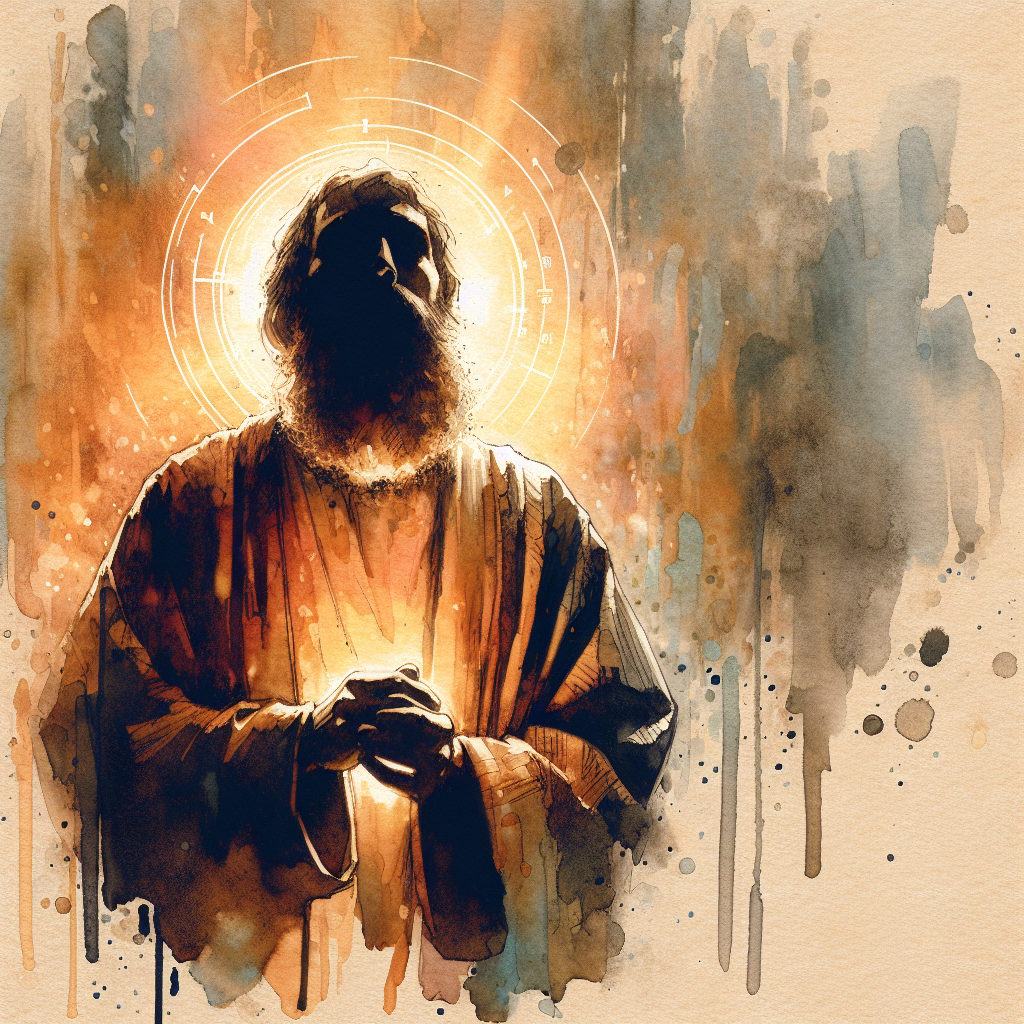
The Psalm Jesus Prayed: Psalm 22
My God, my God, why have you forsaken me? Why are you so far from saving me, so far from my cries of anguish?
The cry rips from the throat of the sufferer. My God—twice, desperate, possessive even in abandonment. Why? The question every sufferer asks. Why the silence? Why the distance? Why the forsakenness?
A thousand years after David wrote these words, Jesus would scream them from a cross.
My God, I cry out by day, but you do not answer, by night, but I find no rest.
Day and night. Ceaseless crying. No answer. No rest. The sufferer is not giving up—he keeps crying. But heaven seems bronze, sealed, silent.
Yet you are enthroned as the Holy One; you are the one Israel praises.
Yet. The pivot word of faith. God is still holy. Still enthroned. Still praised. The sufferer's experience contradicts his theology—but he holds to theology.
In you our ancestors put their trust; they trusted and you delivered them. To you they cried out and were escaped; in you they trusted and were not put to shame.
History testifies. The fathers trusted. They were delivered. They were not ashamed. But the sufferer feels like the exception, the one God forgot.
But I am a worm and not a man, scorned by everyone, despised by the people.
Worm. Lower than human. The self-image of one crushed by suffering and rejection. Scorned. Despised. The humanity has been stripped away.
All who see me mock me; they hurl insults, shaking their heads: He trusts in the Lord, they say, let the Lord rescue him. Let him deliver him, since he delights in him.
The mockers quote Scripture sarcastically. If God loves you so much, where is he? They shake their heads—the ancient gesture of contempt. The religious sufferer endures religious mockery.
These exact words were hurled at Jesus on the cross.
Yet you brought me out of the womb; you made me trust in you, even at my mother's breast. From birth I was cast on you; from my mother's womb you have been my God.
Yet again. Back to faith. God was there at the beginning. The womb, the breast, the first breath. From birth, belonging to God. The relationship predates the suffering.
Do not be far from me, for trouble is near and there is no one to help.
The plea intensifies. Trouble is near. Help is absent. Only God can close the distance.
Many bulls surround me; strong bulls of Bashan encircle me. Roaring lions that tear their prey open their mouths wide against me.
The enemies become beasts. Bulls—powerful, threatening. Lions—tearing, devouring. The sufferer is prey surrounded by predators.
I am poured out like water, and all my bones are out of joint. My heart has turned to wax; it has melted within me.
Physical collapse. Poured out—no form, no strength remaining. Bones dislocated. Heart melting. The body fails.
My mouth is dried up like a potsherd, and my tongue sticks to the roof of my mouth; you lay me in the dust of death.
Dehydration. Tongue stuck to palate. Dust of death—the grave is close. I thirst, Jesus said.
Dogs surround me, a pack of villains encircles me; they pierce my hands and my feet.
Dogs—scavengers waiting for death. Villains—literally, a congregation of evildoers. And then the stunning detail: they pierce my hands and my feet.
Written centuries before crucifixion was invented. David could not have known. But God knew.
All my bones are on display; people stare and gloat over me. They divide my clothes among them and cast lots for my garment.
Bones visible—stretched, exposed. Spectators gloating. And the detail that would be fulfilled exactly at Golgotha: gambling for the dying man's clothes.
But you, Lord, do not be far from me. You are my strength; come quickly to help me.
The turn begins. But you. The plea becomes confident. Strength. Help. Quickly.
Deliver me from the sword, my precious life from the power of the dogs. Rescue me from the mouth of the lions; save me from the horns of the wild oxen.
Deliverance requested. From sword, dogs, lions, oxen. Every enemy catalogued, every rescue requested.
You have answered me.
Three words. The psalm's hinge. Something has changed. The cry was heard. The answer came. From despair to deliverance in three words.
I will declare your name to my people; in the assembly I will praise you.
The sufferer becomes witness. What was private agony becomes public testimony. The assembly will hear of God's rescue.
You who fear the Lord, praise him! All you descendants of Jacob, honor him! Revere him, all you descendants of Israel!
The call expands. Fear, praise, honor, revere. All Israel summoned to worship.
For he has not despised or scorned the suffering of the afflicted one; he has not hidden his face from him but has listened to his cry for help.
The testimony: God heard. He did not despise the sufferer. He did not hide his face permanently. He listened.
From you comes the theme of my praise in the great assembly; before those who fear you I will fulfill my vows.
The great assembly. Vows kept. Praise offered. The private sufferer now leads public worship.
The poor will eat and be satisfied; those who seek the Lord will praise him—may your hearts live forever!
The poor included. A feast follows the suffering. Satisfaction after hunger. Life after death.
All the ends of the earth will remember and turn to the Lord, and all the families of the nations will bow down before him.
The scope expands to global. Ends of the earth. All families. All nations. Bowing. The personal psalm becomes universal prophecy.
For dominion belongs to the Lord and he rules over the nations.
Dominion. Rule. The forsaken one is vindicated. The crucified one is King.
All the rich of the earth will feast and worship; all who go down to the dust will kneel before him—those who cannot keep themselves alive.
Rich and poor. Living and dying. All kneel. Even those descending to dust.
Posterity will serve him; future generations will be told about the Lord. They will proclaim his righteousness, declaring to a people yet unborn: He has done it!
The final words. He has done it. In Hebrew, a single word. The psalm ends on completion, accomplishment, finished work.
It is finished, Jesus said. Same meaning. Same triumph. The psalm that began in forsakenness ends in victory.
David wrote it. Jesus fulfilled it. We read it and recognize: the suffering servant, the pierced one, the forsaken one who was vindicated. The psalm Jesus prayed.
Powered by ChurchWiseAI
This illustration is a preview of what our AI-powered ministry platform can do. ChurchWiseAI offers a full suite of tools built for pastors and church leaders.
Sermon Companion
Build entire sermons with AI — outlines, illustrations, application points, and slide decks tailored to your tradition.
Ministry Chatbot
An AI assistant trained on theology, counseling frameworks, and church administration to help with any ministry question.
Bible Study Builder
Generate discussion guides, devotionals, and small group materials from any passage — in minutes, not hours.
Try any app free for 7 days — no credit card required.
Get Started