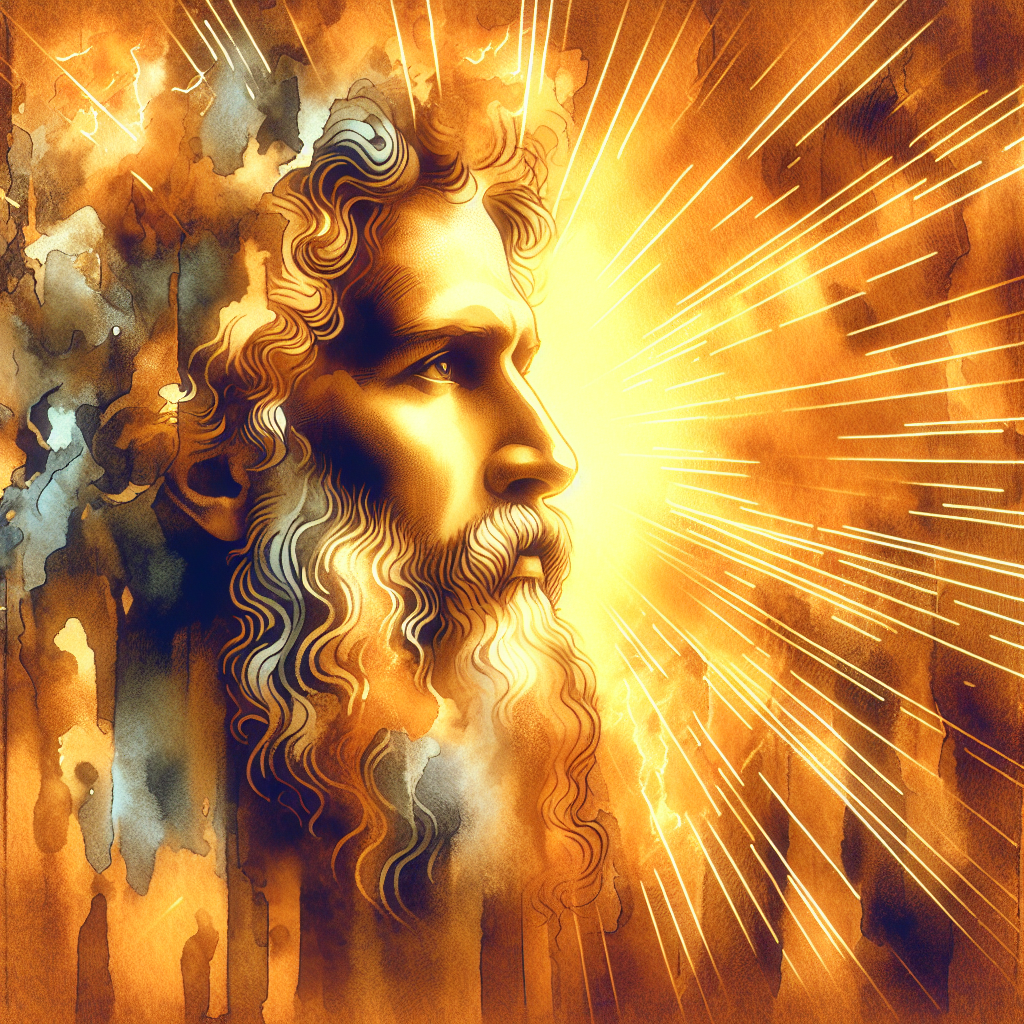
The Shining Face: Exodus 34:1-10, 29-35
The Lord said to Moses, Chisel out two stone tablets like the first ones, and I will write on them the words that were on the first tablets, which you broke.
New tablets. The first ones shattered at the golden calf. Now Moses must chisel new ones—human labor preparing for divine inscription. The covenant would be renewed.
Be ready in the morning, and then come up on Mount Sinai. Present yourself to me there on top of the mountain. No one is to come with you or be seen anywhere on the mountain.
Alone again. Morning appointment on the summit. The mountain cleared of all others. Moses and God, stone tablets between them.
So Moses chiseled out two stone tablets like the first ones and went up Mount Sinai early in the morning, as the Lord had commanded him; and he carried the two stone tablets in his hands.
The ascent. Stone tablets heavy in his hands. The mountain that had terrified a nation—Moses climbed it again.
Then the Lord came down in the cloud and stood there with him and proclaimed his name, the Lord.
The LORD came down. Stood there—the word suggests positioning himself beside Moses. And then: proclaimed his name. What Moses had asked to see, he would now hear declared.
And he passed in front of Moses, proclaiming, The Lord, the Lord, the compassionate and gracious God, slow to anger, abounding in love and faithfulness, maintaining love to thousands, and forgiving wickedness, rebellion and sin.
The glory translated into attributes. The LORD, the LORD—the name repeated for emphasis. Then the description:
Compassionate—moved by human suffering.
Gracious—giving what is not deserved.
Slow to anger—patient beyond human measure.
Abounding in love—hesed, covenant loyalty, overflowing.
Faithful—reliable, trustworthy, consistent.
Maintaining love to thousands—generational blessing.
Forgiving wickedness, rebellion, sin—every category of failure covered.
Yet he does not leave the guilty unpunished; he punishes the children and their children for the sin of the parents to the third and fourth generation.
The balance. Mercy does not mean indifference to sin. The guilty face consequences. But note the math again: love to thousands, punishment to three or four. Mercy overwhelms judgment.
Moses bowed to the ground at once and worshiped.
The only response. Bowed. Worshiped. The proclamation of God's character produced prostration.
Lord, he said, if I have found favor in your eyes, then let the Lord go with us. Although this is a stiff-necked people, forgive our wickedness and our sin, and take us as your inheritance.
The request renewed. Go with us. Forgive us. Take us as your inheritance. Moses included himself—our wickedness, our sin. The intercessor identified with the sinners.
Then the Lord said: I am making a covenant with you. Before all your people I will do wonders never before done in any nation in all the world. The people you live among will see how awesome is the work that I, the Lord, will do for you.
Covenant renewed. Wonders promised. The nations will see and know: the LORD works for Israel.
When Moses came down from Mount Sinai with the two tablets of the covenant law in his hands, he was not aware that his face was radiant because he had spoken with the Lord.
Radiant. The Hebrew suggests sending out beams, horns of light. Moses didn't know. He had been in glory's presence, and glory left its mark.
When Aaron and all the Israelites saw Moses, his face was radiant, and they were afraid to come near him.
Afraid. The glory on Moses' face frightened them. The reflection of the God they had rejected—now visible on human skin.
But Moses called to them; so Aaron and all the leaders of the community came back to him, and he spoke to them.
Moses called them. Don't be afraid. Come near. The radiance was invitation, not threat.
Afterward all the Israelites came near him, and he gave them all the commands the Lord had given him on Mount Sinai.
The commands delivered. The radiant face speaking the holy words. The glory authenticating the message.
When Moses finished speaking to them, he put a veil over his face.
A veil. Covering the glory. Making approach possible.
But whenever he entered the Lord's presence to speak with him, he removed the veil until he came out. And when he came out and told the Israelites what he had been commanded, they saw that his face was radiant; then Moses would put the veil back over his face until he went in to speak with the Lord.
The pattern established. Veil off in God's presence. Veil on with the people. Unveiled worship, veiled ministry. The glory was too much for constant viewing.
Paul would later write that the glory was fading, and the veil hid its diminishment. But Moses carried heaven's glow on his face—proof that he had been with God, evidence that glory can touch humanity and not destroy it.
Powered by ChurchWiseAI
This illustration is a preview of what our AI-powered ministry platform can do. ChurchWiseAI offers a full suite of tools built for pastors and church leaders.
Sermon Companion
Build entire sermons with AI — outlines, illustrations, application points, and slide decks tailored to your tradition.
Ministry Chatbot
An AI assistant trained on theology, counseling frameworks, and church administration to help with any ministry question.
Bible Study Builder
Generate discussion guides, devotionals, and small group materials from any passage — in minutes, not hours.
Try any app free for 7 days — no credit card required.
Get Started