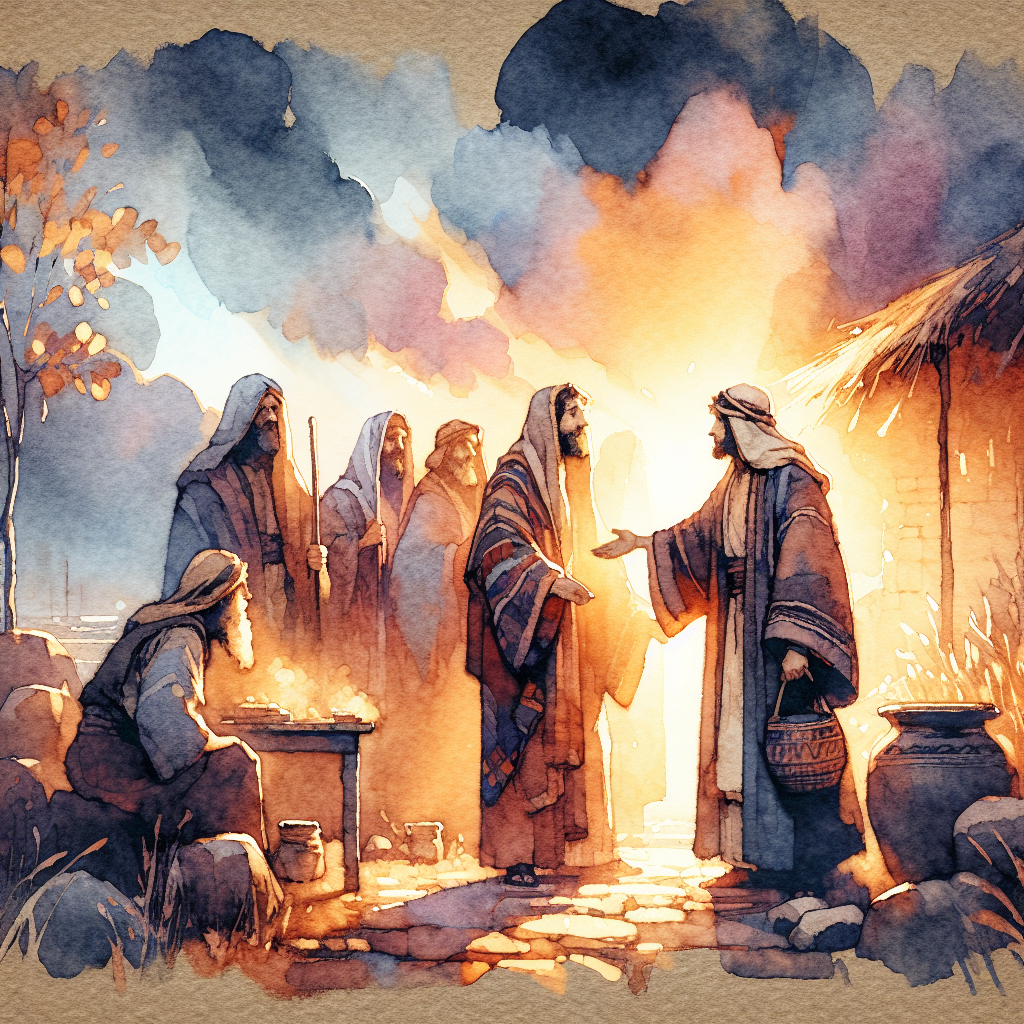
The Stolen Blessing: Genesis 27:1-40
When Isaac was old and his eyes were so weak that he could no longer see, he called for Esau his older son.
Blind Isaac, preparing to die, wanted to bless his favorite son. The blessing was more than words—it was the transfer of covenant promise, the designation of the family's future.
"My son," he said to him. "Here I am," he answered.
Isaac said, "I am now an old man and don't know the day of my death. Now then, get your weapons—your quiver and bow—and go out to the open country to hunt some wild game for me. Prepare me the kind of tasty food I like and bring it to me to eat, so that I may give you my blessing before I die."
One last meal of venison. One final blessing. Isaac was ready to pass the covenant to Esau—despite God's oracle that the older would serve the younger.
Now Rebekah was listening as Isaac spoke to his son Esau.
Listening. Eavesdropping. Planning. Rebekah had never forgotten what God said about her sons. If Isaac would not honor the oracle, she would force it.
So when Esau left for the open country to hunt game and bring it back, Rebekah said to her son Jacob, "Look, I overheard your father say to your brother Esau, 'Bring me some game and prepare me some tasty food to eat, so that I may give you my blessing in the presence of the LORD before I die.' Now, my son, listen carefully and do what I tell you."
The conspiracy began. Mother and son against father and brother. The family fractured along its fault lines.
"Go out to the flock and bring me two choice young goats, so I can prepare some tasty food for your father, just the way he likes it. Then take it to your father to eat, so that he may give you his blessing before he dies."
Goat meat disguised as venison. Deception dressed as dinner.
Jacob said to Rebekah his mother, "But my brother Esau is a hairy man while I have smooth skin. What if my father touches me? I would appear to be tricking him and would bring down a curse on myself rather than a blessing."
Jacob's objection was not moral but practical. He was not worried about the sin of lying—he was worried about getting caught.
His mother said to him, "My son, let the curse fall on me. Just do what I say; go and get them for me."
Rebekah took the curse upon herself. Whatever happened, she would bear it.
So he went and got them and brought them to his mother, and she prepared some tasty food, just the way his father liked it. Then Rebekah took the best clothes of Esau her older son, which she had in the house, and put them on her younger son Jacob. She also covered his hands and the smooth part of his neck with the goatskins.
Esau's clothes for the smell. Goatskins for the touch. The deception was layered—sight (which Isaac lacked), smell, touch, even taste with the prepared food.
Then she handed to her son Jacob the tasty food and the bread she had made.
He went to his father and said, "My father."
"Yes, my son," he answered. "Who is it?"
Jacob said to his father, "I am Esau your firstborn. I have done as you told me. Please sit up and eat some of my game, so that you may give me your blessing."
The first lie. Direct, deliberate, looking his blind father in the face: I am Esau.
Isaac asked his son, "How did you find it so quickly, my son?"
"The LORD your God gave me success," he answered.
The second lie—dragging God into the deception. The LORD helped me. Blasphemy layered on fraud.
Then Isaac said to Jacob, "Come near so I can touch you, my son, to know whether you really are my son Esau or not."
Jacob went close to his father Isaac, who touched him and said, "The voice is the voice of Jacob, but the hands are the hands of Esau."
The voice betrayed him. But the hairy goatskins fooled the fingers. Isaac was not sure.
He did not recognize him, for his hands were hairy like those of his brother Esau; so he proceeded to bless him. "Are you really my son Esau?" he asked.
"I am," he replied.
The third lie. Are you really Esau? I am.
Then he said, "My son, bring me some of your game to eat, so that I may give you my blessing."
Jacob brought it to him and he ate; and he brought some wine and he drank. Then his father Isaac said to him, "Come here, my son, and kiss me."
So he went to him and kissed him. When Isaac caught the smell of his clothes, he blessed him and said, "Ah, the smell of my son is like the smell of a field that the LORD has blessed."
The smell of Esau's clothes—earth and hunt and open country. Isaac breathed it in and believed.
"May God give you heaven's dew and earth's richness—an abundance of grain and new wine. May nations serve you and peoples bow down to you. Be lord over your brothers, and may the sons of your mother bow down to you. May those who curse you be cursed and those who bless you be blessed."
The blessing poured out. Heaven's dew. Earth's richness. Nations serving. Brothers bowing. The covenant promises, transferred.
After Isaac finished blessing him, and Jacob had scarcely left his father's presence, his brother Esau came in from hunting.
Scarcely left. The timing was razor-thin. One brother out the back as the other came in the front.
He too prepared some tasty food and brought it to his father. Then he said to him, "My father, please sit up and eat some of my game, so that you may give me your blessing."
His father Isaac asked him, "Who are you?"
"I am your son," he answered, "your firstborn, Esau."
Isaac trembled violently and said, "Who was it, then, that hunted game and brought it to me? I ate it just before you came and I blessed him—and indeed he will be blessed!"
Trembled violently. The Hebrew suggests convulsive shaking. Isaac realized what had happened—and realized he could not undo it. The blessing, once given, could not be recalled.
When Esau heard his father's words, he burst out with a loud and bitter cry and said to his father, "Bless me—me too, my father!"
The cry echoes through Scripture. Bitter. Loud. Desperate. Hebrews would later call Esau one who could find no place for repentance, though he sought it with tears.
But he said, "Your brother came deceitfully and took your blessing."
Esau said, "Isn't he rightly named Jacob? This is the second time he has taken advantage of me: He took my birthright, and now he's taken my blessing!" Then he asked, "Haven't you reserved any blessing for me?"
Jacob—the supplanter, the heel-grabber. His name was his destiny. But Esau conveniently forgot that he had sold his birthright for soup.
Isaac answered Esau, "I have made him lord over you and have made all his relatives his servants, and I have sustained him with grain and new wine. So what can I possibly do for you, my son?"
Esau said to his father, "Do you have only one blessing, my father? Bless me too, my father!" Then Esau wept aloud.
His father Isaac answered him, "Your dwelling will be away from the earth's richness, away from the dew of heaven above. You will live by the sword and you will serve your brother. But when you grow restless, you will throw his yoke from off your neck."
A lesser blessing—or perhaps a curse. Esau would live by violence, would serve his brother, would eventually break free. But the covenant promises were gone.
The stolen blessing could not be returned. The family was shattered. And Jacob—the deceiver blessed—would soon learn what it meant to be deceived.
Powered by ChurchWiseAI
This illustration is a preview of what our AI-powered ministry platform can do. ChurchWiseAI offers a full suite of tools built for pastors and church leaders.
Sermon Companion
Build entire sermons with AI — outlines, illustrations, application points, and slide decks tailored to your tradition.
Ministry Chatbot
An AI assistant trained on theology, counseling frameworks, and church administration to help with any ministry question.
Bible Study Builder
Generate discussion guides, devotionals, and small group materials from any passage — in minutes, not hours.
Try any app free for 7 days — no credit card required.
Get Started