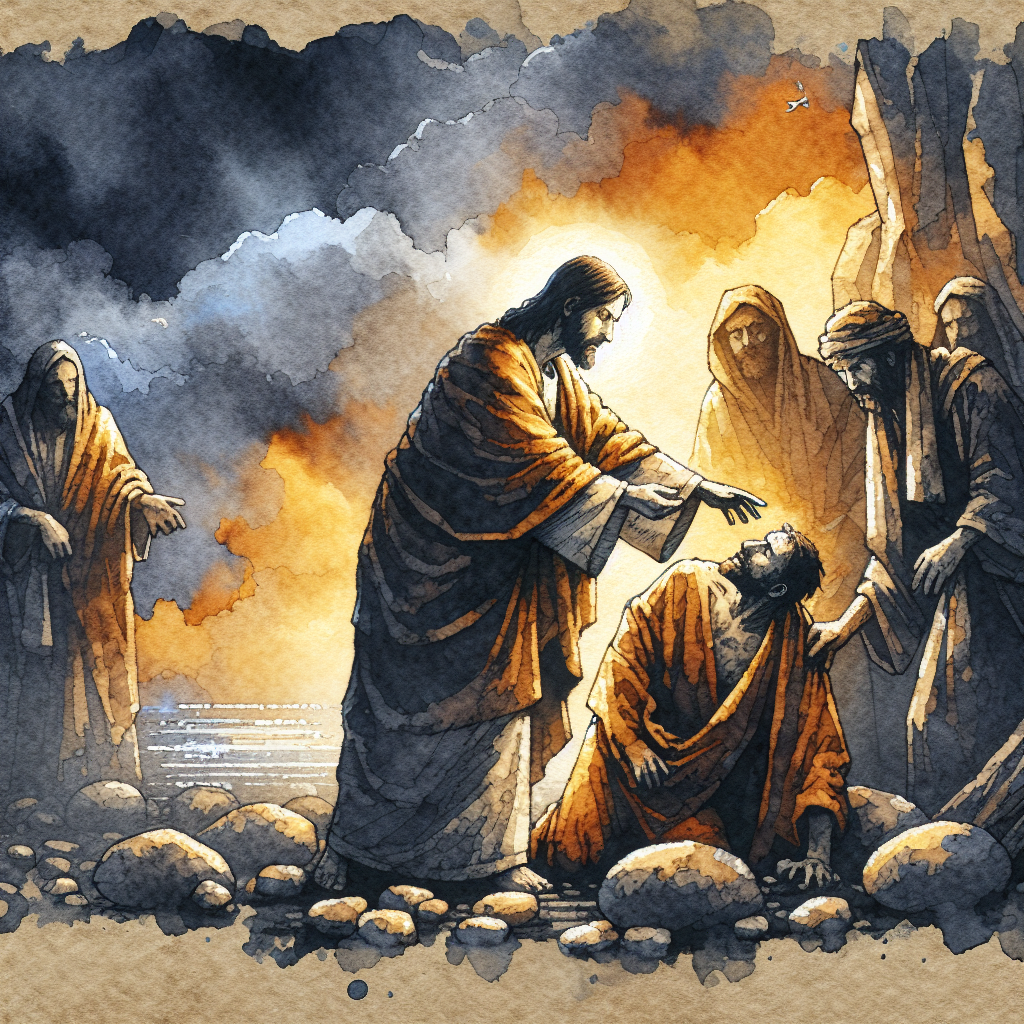
The Touch No One Would Give: Mark 1:40-45
He appeared from nowhere—or perhaps he had been watching from a distance, waiting for his moment, gathering courage that had long since rotted away with his flesh. The leper fell to his knees in the dust before Jesus, and the crowd scrambled backward as if from a snake.
His face was a ruin. The disease had eaten away at nose and lips, had turned fingers into claws, had covered his skin with patches of white death. For years—perhaps decades—no one had touched him. Not his mother. Not his wife, if he had ever had one. Not his children. The law demanded he announce his presence everywhere he went: "Unclean! Unclean!" A walking corpse. A living ghost.
"If you are willing," he said, and his voice cracked from disuse, "you can make me clean."
Something moved across Jesus' face that Mark calls "compassion"—but the Greek word is deeper than that. It means his gut twisted. His insides churned. He felt the man's decades of isolation in his own body.
And then Jesus did the unthinkable.
He reached out and touched him.
The crowd gasped. Some turned away. To touch a leper was to become unclean yourself—to invite the corruption into your own flesh. But Jesus' hand rested on that ruined skin, and when he spoke, his voice was fierce: "I am willing. Be clean."
The leprosy did not gradually heal. It fled. New skin spread across the man's body like dawn spreading across a dark landscape. Fingers straightened. The face reformed. He stood there trembling, whole, tears cutting channels down cheeks that could feel again.
"Don't tell anyone," Jesus warned. "Go show yourself to the priest and offer the sacrifices Moses commanded."
But how do you keep silent when you have been resurrected while still breathing? The man told everyone. He couldn't stop talking. And Jesus could no longer enter any town openly—the crowds were too massive, the desperation too crushing. He stayed in the lonely places.
But still they came to him from everywhere.
Powered by ChurchWiseAI
This illustration is a preview of what our AI-powered ministry platform can do. ChurchWiseAI offers a full suite of tools built for pastors and church leaders.
Sermon Companion
Build entire sermons with AI — outlines, illustrations, application points, and slide decks tailored to your tradition.
Ministry Chatbot
An AI assistant trained on theology, counseling frameworks, and church administration to help with any ministry question.
Bible Study Builder
Generate discussion guides, devotionals, and small group materials from any passage — in minutes, not hours.
Try any app free for 7 days — no credit card required.
Get Started