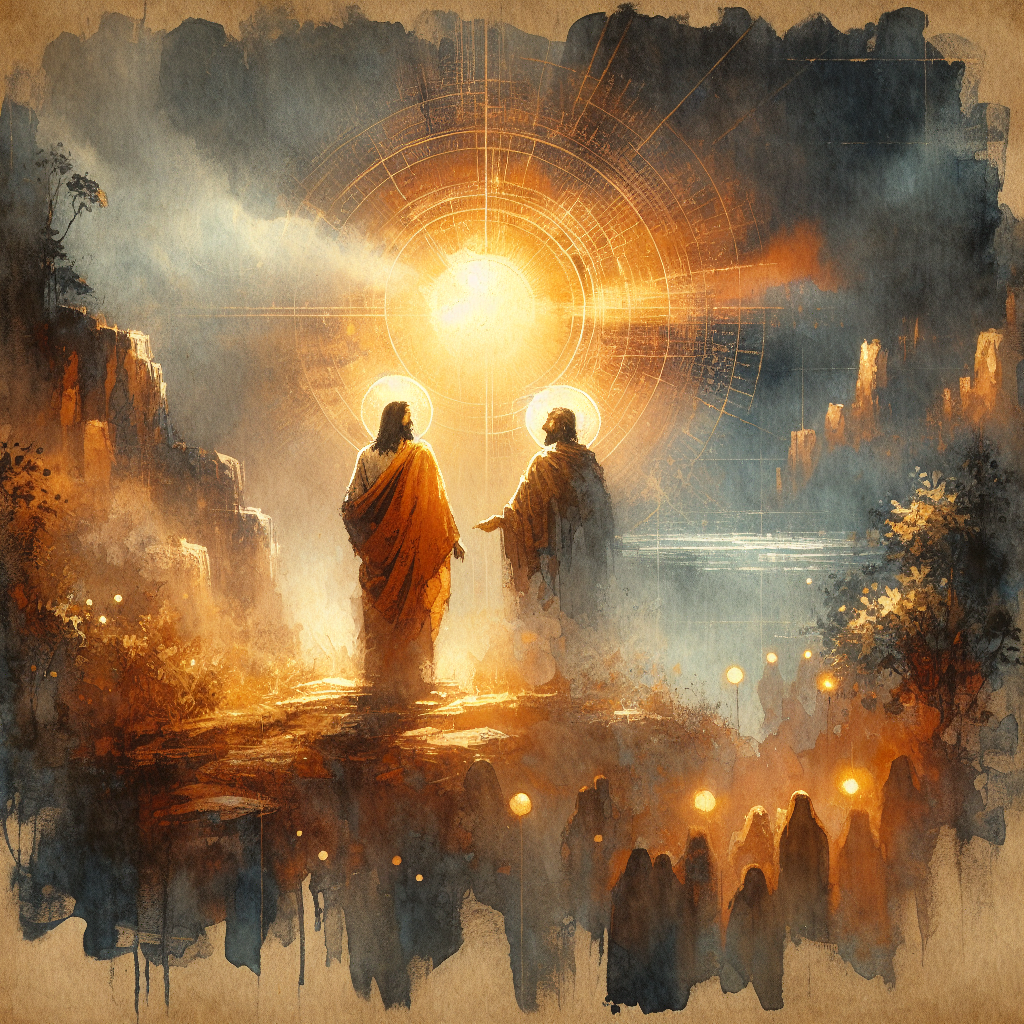
You Must Be Born Again: John 3:1-21
Now there was a Pharisee, a man named Nicodemus who was a member of the Jewish ruling council.
Nicodemus. A Pharisee—devout, learned, zealous for the Law. A member of the Sanhedrin—the ruling council, the seventy who governed religious life in Israel. This was no ordinary seeker.
He came to Jesus at night and said, Rabbi, we know that you are a teacher who has come from God. For no one could perform the signs you are doing if God were not with him.
At night. The timing was deliberate—privacy, perhaps embarrassment, perhaps fear. A Sanhedrin member visiting an upstart rabbi was risky.
Rabbi, we know. Nicodemus spoke for a group—some Pharisees were watching, wondering. Teacher from God. The signs proved divine backing. Nicodemus came with a compliment and an unspoken question.
Jesus replied, Very truly I tell you, no one can see the kingdom of God unless they are born again.
Jesus cut through the compliments to the core issue. Born again—or born from above, the Greek word can mean either. Seeing the kingdom required new birth, not religious achievement.
How can someone be born when they are old? Nicodemus asked. Surely they cannot enter a second time into their mother's womb to be born!
Nicodemus understood literally—and the literal meaning was absurd. How can an old man crawl back into the womb? What are you saying?
Jesus answered, Very truly I tell you, no one can enter the kingdom of God unless they are born of water and the Spirit.
Water and Spirit. Physical birth and spiritual birth. Flesh produces flesh; Spirit produces spirit. Entry into the kingdom required a birth that Nicodemus, with all his learning, could not produce.
Flesh gives birth to flesh, but the Spirit gives birth to spirit. You should not be surprised at my saying, You must be born again.
Must. Not might, not should consider. Must be born again. Nicodemus the Pharisee, the teacher, the ruler—even he must be born again. Achievement could not replace regeneration.
The wind blows wherever it pleases. You hear its sound, but you cannot tell where it comes from or where it is going. So it is with everyone born of the Spirit.
Wind—pneuma in Greek, the same word as spirit. You cannot control the wind. You cannot command it. You experience its effects but not its origins. The Spirit moves sovereignly, mysteriously, powerfully.
How can this be? Nicodemus asked.
How can this be? The teacher of Israel was confused by the basics of spiritual life.
You are Israel's teacher, said Jesus, and do you not understand these things?
The rebuke was gentle but pointed. You teach Israel, and this confuses you? The prophets had spoken of new hearts, of the Spirit poured out. Nicodemus should have known.
Very truly I tell you, we speak of what we know, and we testify to what we have seen, but still you people do not accept our testimony.
Jesus spoke with authority—what we know, what we have seen. But even testimony was rejected.
I have spoken to you of earthly things and you do not believe; how then will you believe if I speak of heavenly things?
New birth was the easy part—earthly things, accessible concepts. Heavenly things went deeper still. If Nicodemus stumbled here, what would happen with harder truths?
No one has ever gone into heaven except the one who came from heaven—the Son of Man.
Authority to speak of heaven belonged to the one from heaven. Jesus claimed that origin, that knowledge, that unique perspective.
Just as Moses lifted up the snake in the wilderness, so the Son of Man must be lifted up, that everyone who believes may have eternal life in him.
The bronze serpent. Numbers 21—Israel bitten by snakes, dying in the desert. Moses lifted a bronze snake on a pole; all who looked lived. Now Jesus prophesied: the Son of Man must be lifted up. The cross was foreshadowed.
For God so loved the world that he gave his one and only Son, that whoever believes in him shall not perish but have eternal life.
The summary of the gospel in one sentence. God loved. God gave. Whoever believes. Shall not perish. Eternal life.
For God did not send his Son into the world to condemn the world, but to save the world through him.
Not to condemn but to save. The purpose was rescue, not judgment.
Whoever believes in him is not condemned, but whoever does not believe stands condemned already because they have not believed in the name of God's one and only Son.
Belief determines destiny. Not condemned versus already condemned. The verdict depends on response to the Son.
This is the verdict: Light has come into the world, but people loved darkness instead of light because their deeds were evil.
The verdict was exposure. Light came; people preferred darkness. Evil hides; righteousness welcomes light.
Everyone who does evil hates the light, and will not come into the light for fear that their deeds will be exposed. But whoever lives by the truth comes into the light, so that it may be seen plainly that what they have done has been done in the sight of God.
Two responses to light: flee or approach. Those who hate light stay in darkness. Those who live truth come to light.
Nicodemus came at night. But the conversation pointed him toward light. Chapters later, he would defend Jesus before the Sanhedrin. After the crucifixion, he would help bury Jesus' body.
The night visitor was being born again—slowly, quietly, genuinely.
Powered by ChurchWiseAI
This illustration is a preview of what our AI-powered ministry platform can do. ChurchWiseAI offers a full suite of tools built for pastors and church leaders.
Sermon Companion
Build entire sermons with AI — outlines, illustrations, application points, and slide decks tailored to your tradition.
Ministry Chatbot
An AI assistant trained on theology, counseling frameworks, and church administration to help with any ministry question.
Bible Study Builder
Generate discussion guides, devotionals, and small group materials from any passage — in minutes, not hours.
Try any app free for 7 days — no credit card required.
Get Started